
Insights on AI search, GEO, AEO & technical SEO.
All posts

What Google AI Mode Cites When Indonesians Plan a Trip
We wanted to see exactly which sites those are. So we built a structured set of Bahasa Indonesia travel prompts, ran each through Google AI Mode, and parsed every domain it cited. What came back was a clear picture of who Google has decided is authoritative on Indonesian travel, and an equally clear picture of who is being read around.
Read post →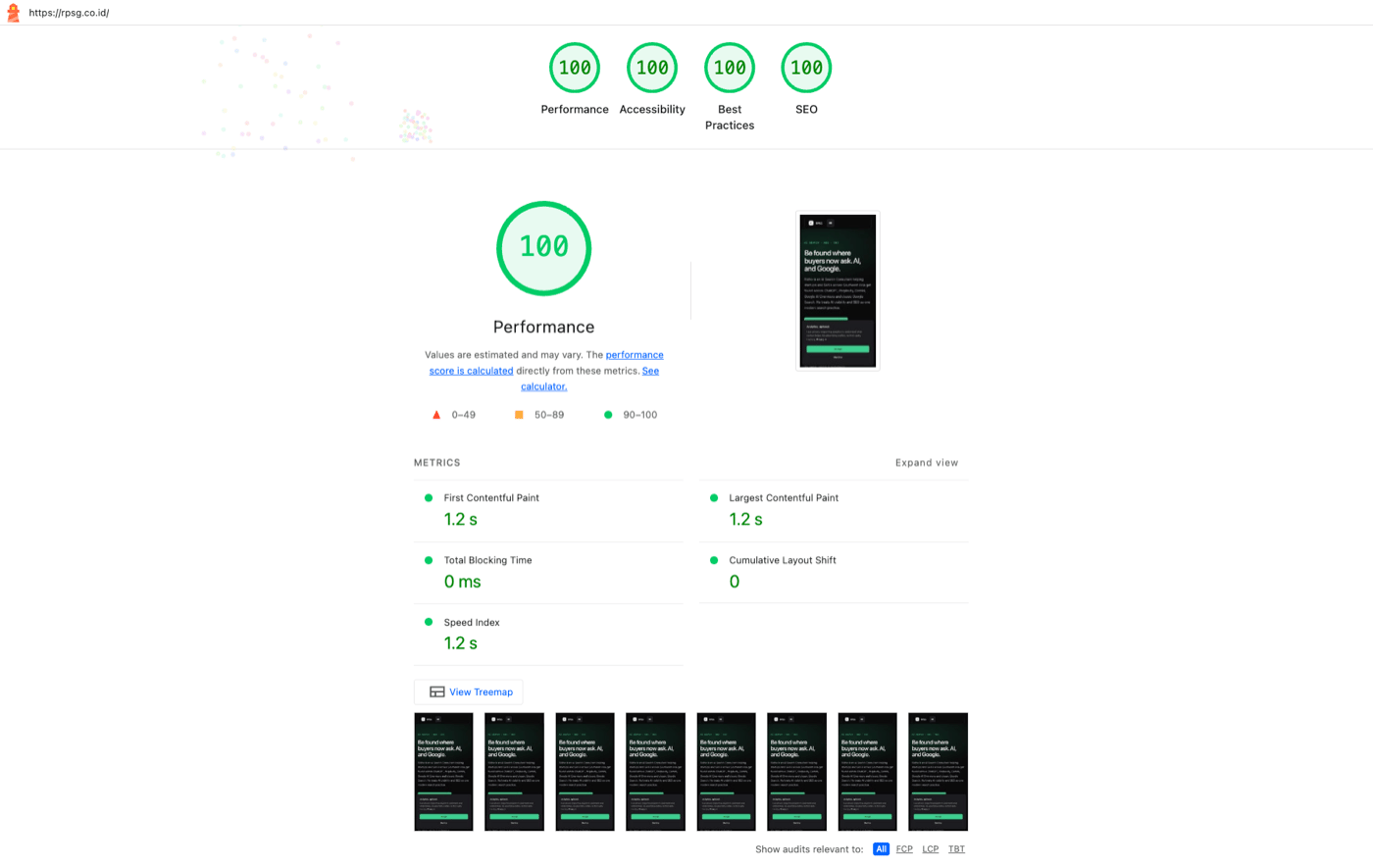
How I got rpsg.co.id to 100/100/100/100 on Lighthouse, and which fixes actually moved the score
Most Lighthouse advice tells you to chase 100 across the board. Half of it does not move the score and most of it does not move the user experience. Here is what actually got rpsg.co.id from 88/95/85/100 to 100/100/100/100, and what I would skip if I were doing this again.
Read post →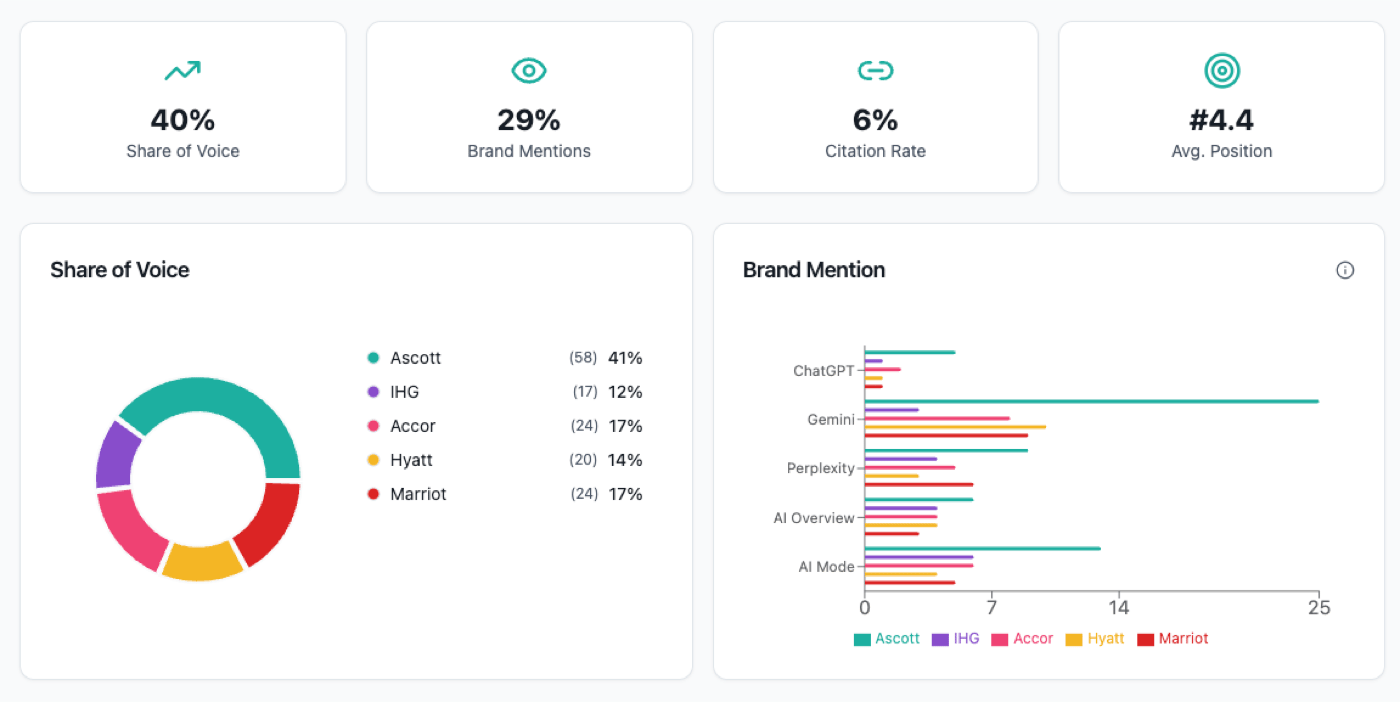
How to Measure AI Share of Voice for Your Brand
AI Share of Voice shows how often ChatGPT, Perplexity, and Gemini name your brand. Inside the measurement discipline that replaces rank tracking.
Read post →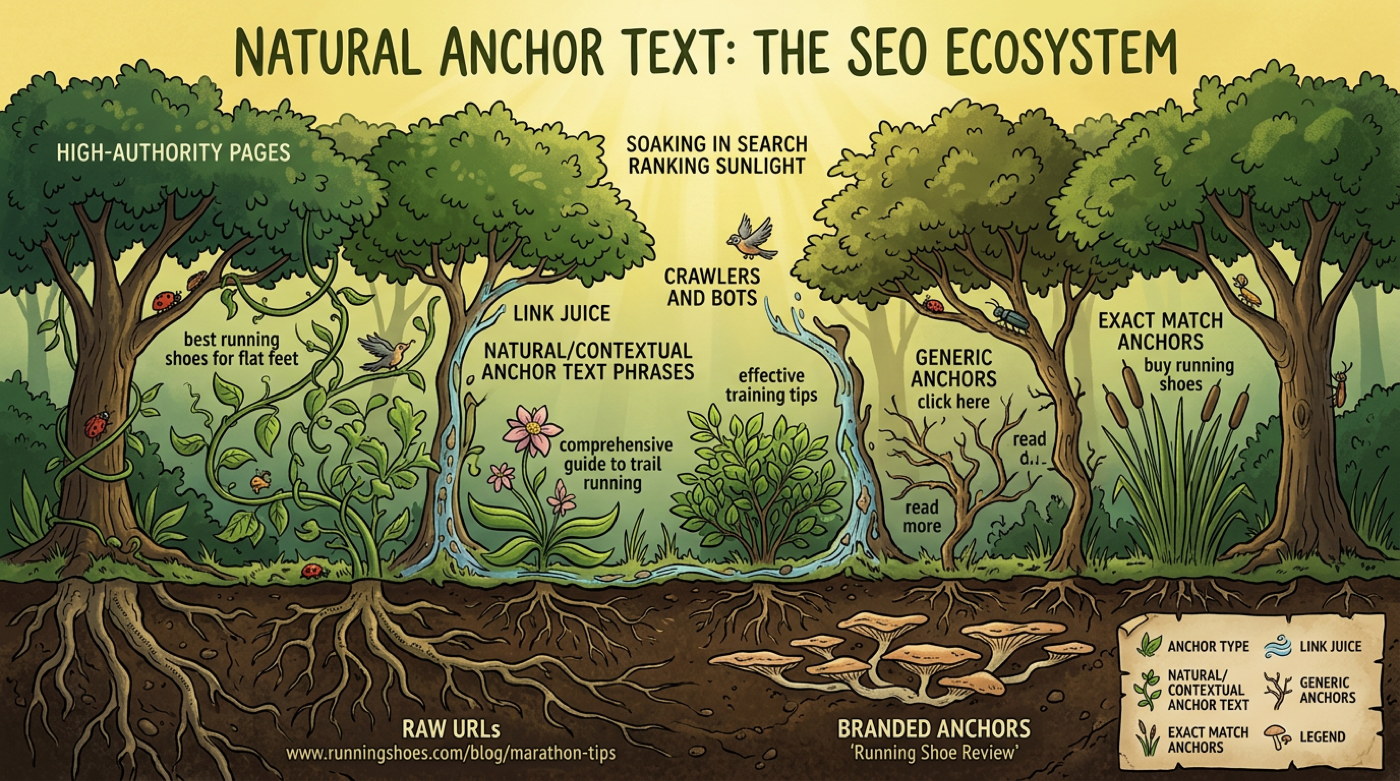
Anchor Text Patterns That Read as Natural to Google
Across healthy enterprise backlink profiles, exact-match commercial anchor text rarely accounts for more than five percent of inbound links. Across profiles that trigger Google's filters, it routinely crosses ten. The distance between those two numbers is one budget cycle of well-meaning vendor work, and the system reading the difference is more sophisticated than most teams plan for.
Read post →
What Makes an SEO Dashboard Worth Opening
A working map of what an enterprise SEO dashboard should actually report, what to delete, and how to build one teams will act on every week.
Read post →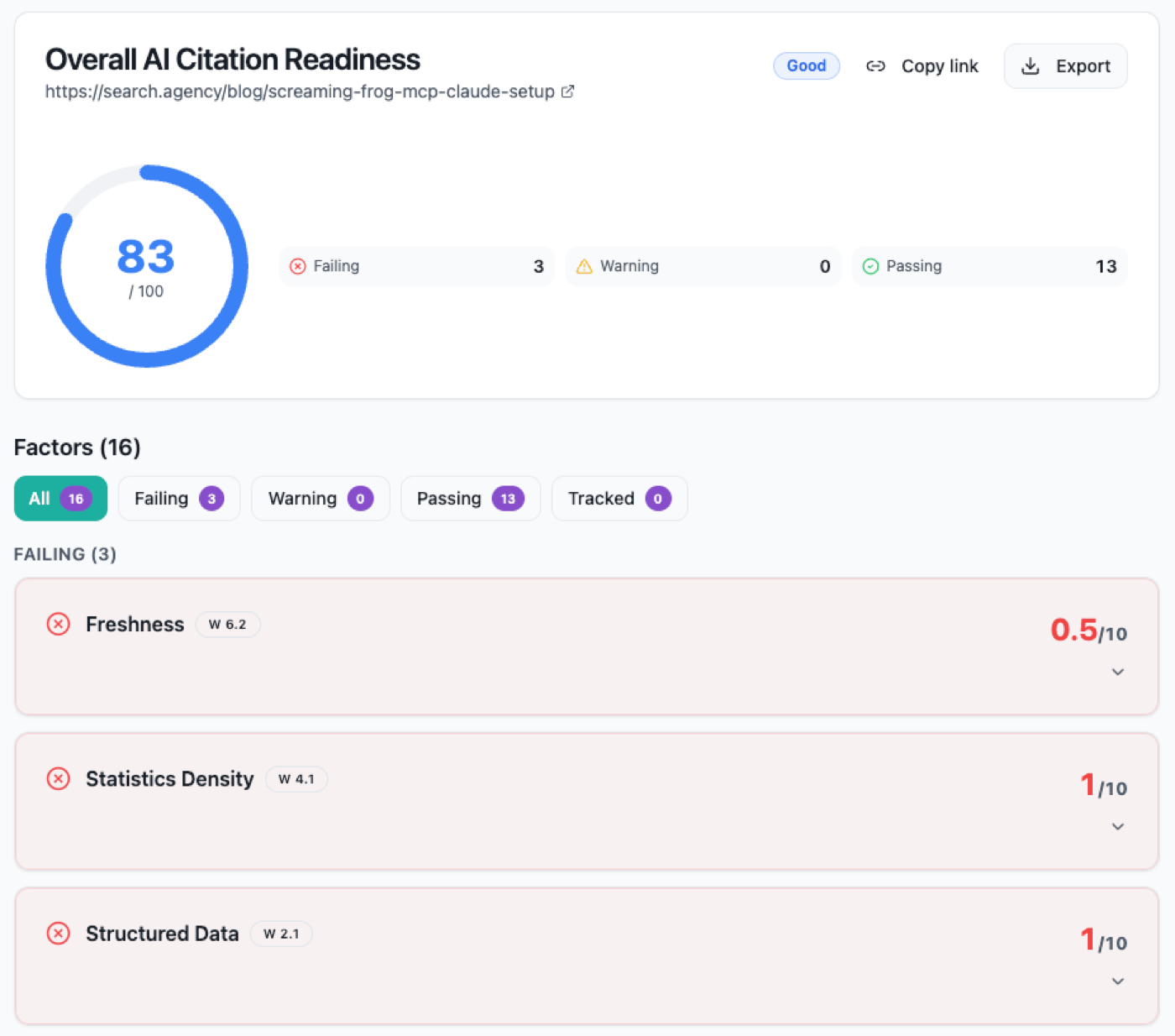
Three Factors an AI Citation Audit Caught on a Post That Scored 83
The prompt was "How to connect Screaming Frog MCP to Claude?", the page was our setup tutorial at search.agency/blog/screaming-frog-mcp-claude-setup, and the tool was StoryMint's AI Citation Audit, which scores how likely a single page is to be cited by an AI engine when a user asks a specific question. The result was an 83 out of 100, a Good rating across sixteen factors with thirteen passes, no warnings, and three failures. The three failures are the whole reason to run an audit like this. AI Citation Readiness is not a measure of how trustworthy or original a page looks in general. It is a measure of whether the retrieval stack inside an AI engine will reach for that exact page when answering that exact question, and the failures are usually the cheap mechanical things that quietly keep a page out of an answer it would otherwise win.
Read post →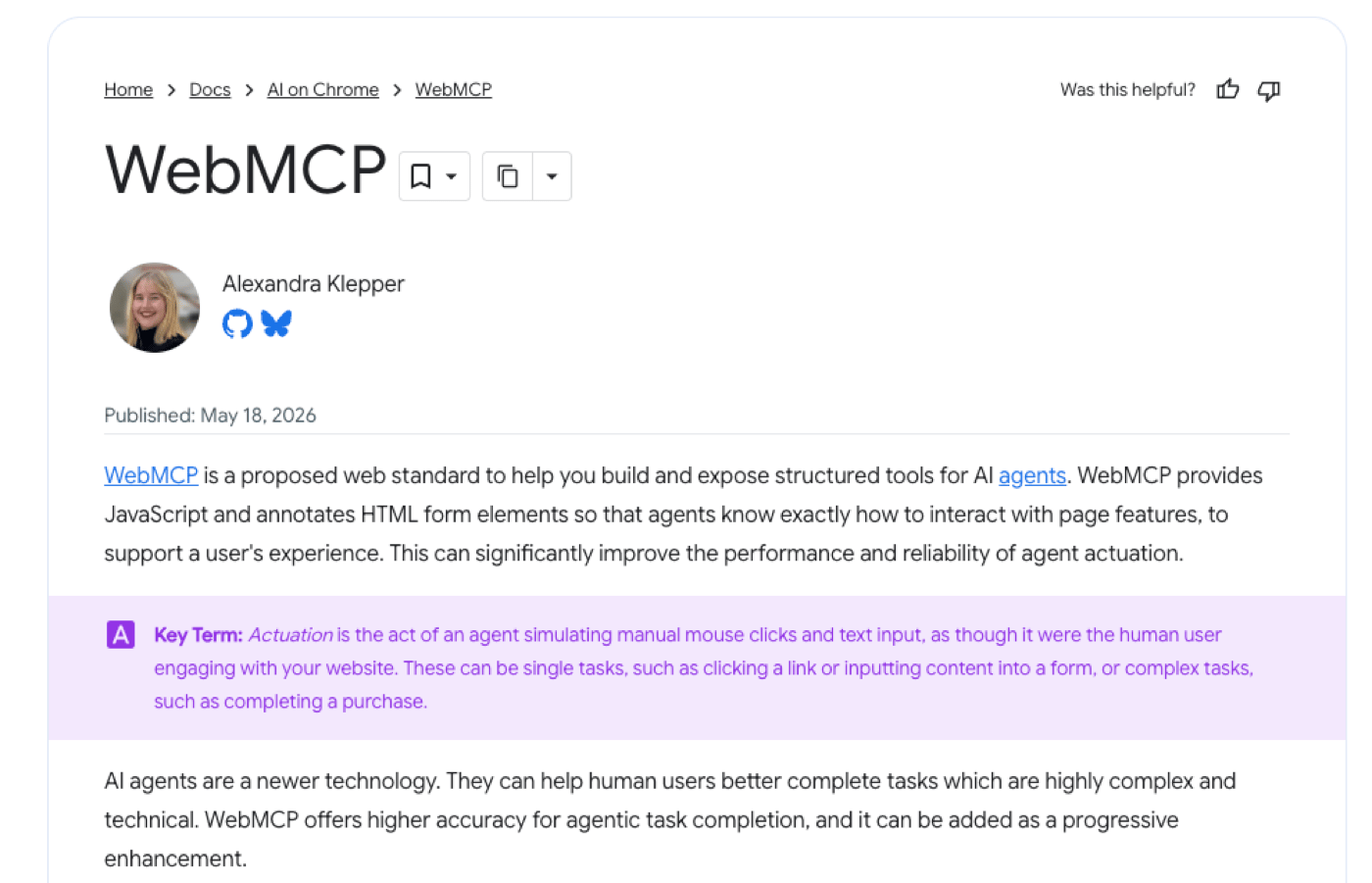
WebMCP: How to Make Your Website Executable by AI Agents
Google and Microsoft, working through the W3C Web Machine Learning Community Group, released WebMCP: a browser native JavaScript API that lets a site expose callable tools directly to AI agents. Chrome 149 moved it into a public origin trial on May 19. Edge 147 has it. The testing flag lives at chrome://flags/#enable-webmcp-testing.
Read post →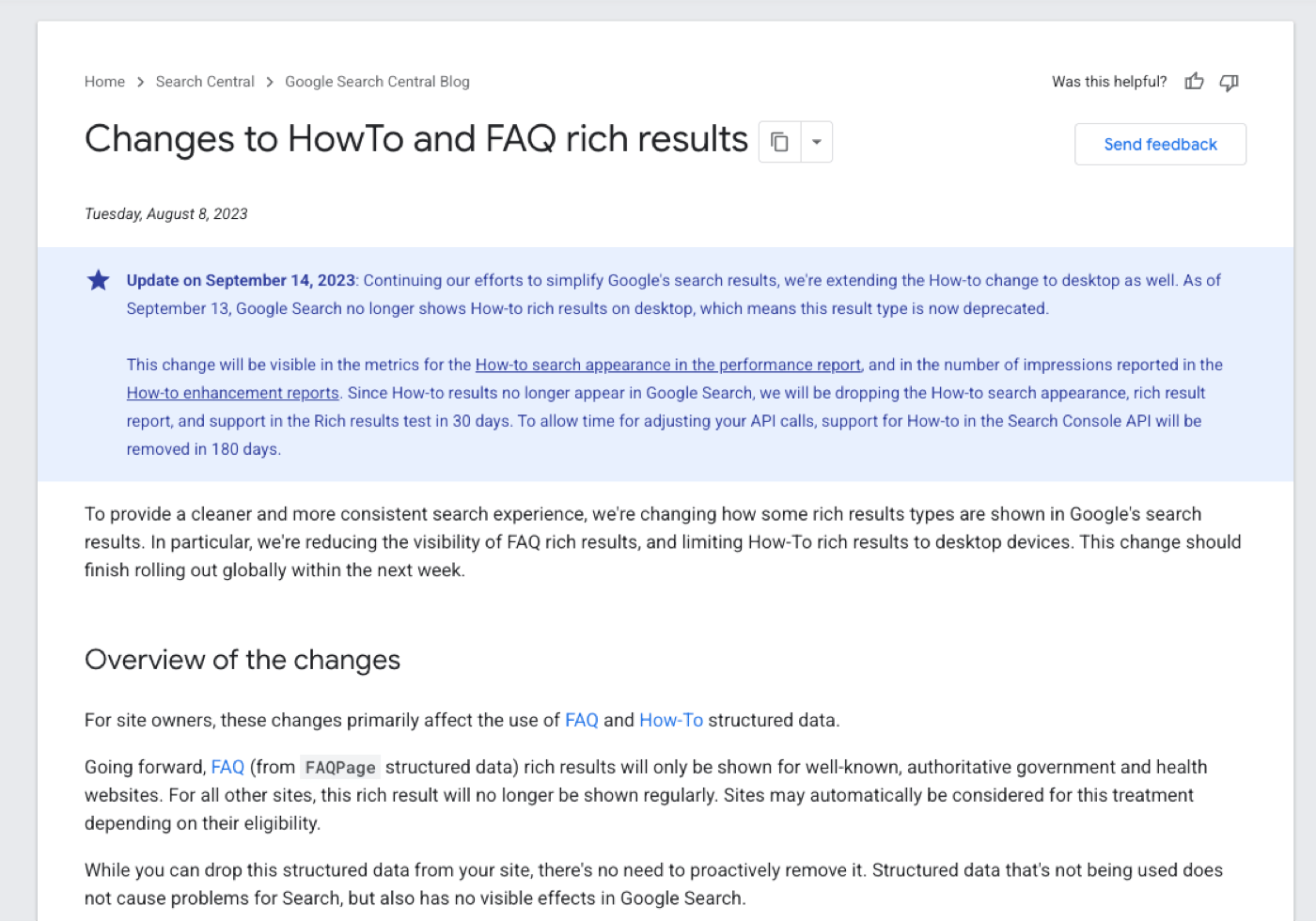
Schema Markup That Still Moves the Needle in 2026
A schema audit in 2026 should start by deleting code, not adding it. Most enterprise sites still ship structured data that no surface renders, no engine rewards, and no team has reviewed since the JSON-LD was pasted in. The interesting question is not which schema to add this quarter. It is which schema is actually earning a result somewhere, and which is sitting in your `<head>` for no reason at all.
Read post →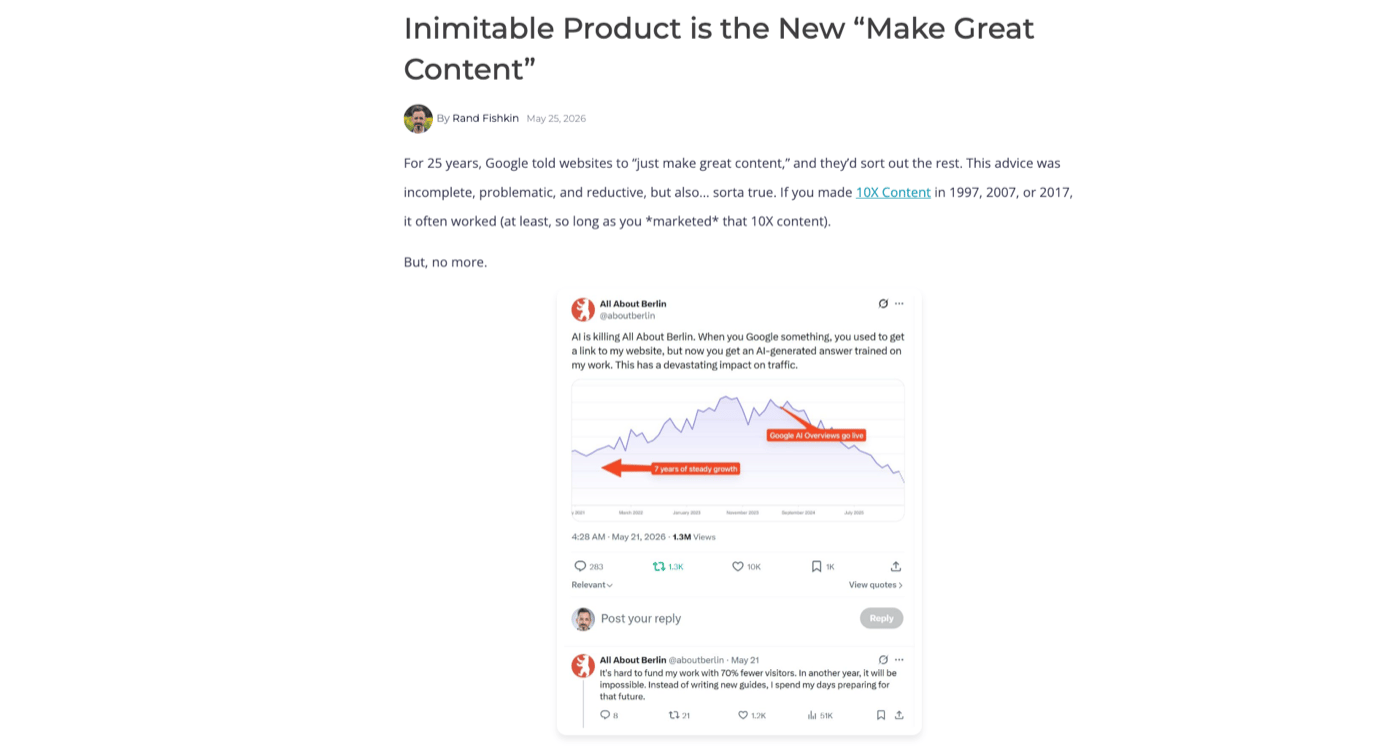
Rand Fishkin Is Half Right About the End of Great Content
The 25-year-old loop where great content drove organic traffic and organic traffic drove growth is breaking, and his framing of why is accurate. The conclusion that companies should pivot to inimitable products instead of content does not survive contact with the enterprise SaaS market, where the inimitable product is already the company. What changes for those buyers is not whether to publish, but what publishing is for.
Read post →
Our Travel Industry Study Finds Two Thirds of Google AI Mode Citations Do Not Rank in the Top 10
Two thirds of the domains Google AI Mode cites in its travel answers are not in the top ten organic results for the same query. That is the headline finding from the first 15 queries of an AI citation study Search Agency is running across the travel industry, starting with Indonesian trip-planning. It changes how enterprise SEO teams should think about who is actually getting found when an AI surface sits on top of Google.
Read post →