
When Ranking #1 Stops Being Enough in the Age of AI Search

Contents+
- 01The overnight drop nobody saw coming
- 02Meanwhile, AI Overviews were quietly repricing the head
- 03In health and other YMYL niches, AI cites credentials, not brands
- 04The audience is in "learn" mode, and they are on their phones
- 05Beware the vanity traffic trap
- 06What this means for your SEO in 2026
- 07Further reading
Most SEO case studies you read are about a brand clawing its way up from nowhere. This one is different. The subject was already winning. Prenagen, operating in one of the largest search markets in the region, was generating the kind of organic volume most marketers only dream about, and it was still bleeding traffic.
| Metric | Figure |
|---|---|
| Organic clicks per month | ~620,000 |
| Monthly search impressions | ~48 million |
| Unique monthly users | ~500,000 |
| Mobile share of clicks | ~96% |
| Visibility vs all direct rivals combined | ~2x |
We dug through more than a year of that brand's performance data, technical audits, AI-search analyses, and on-site user behaviour. What came out was not a story about doing SEO badly. It was a story about how the rules quietly changed underneath a brand that was doing everything the old way correctly. Here are the most useful things we learned, with the numbers rounded.
The overnight drop nobody saw coming
One day in late April, the brand's average position in Google fell from under 5 to around 7. Not over a quarter. Overnight. And it did not bounce back. That two-point slide does not sound dramatic until you translate it into the brand's volume.
| What changed | Reading |
|---|---|
| Average position before | Under 5 |
| Average position after, overnight | Around 7 |
| Clicks lost per month | ~105,000 |
| Extra leak for every week left unfixed | 25,000 to 30,000 |
The cause was not a Google core update, a penalty, or a competitor. It was a single schema choice. The brand's evergreen educational articles, the kind meant to stay useful for years, had been marked up with `NewsArticle` schema. That tag tells Google the content is time-sensitive news. So Google treated hundreds of pages the way it treats news, as content that decays fast and gets demoted as it ages. The pages were not stale. The label said they were.
The lesson here is one a lot of teams still underrate. Schema is not decoration you bolt on for a chance at rich results. It is a classification signal that tells search engines what a page fundamentally is, and the wrong class invites the wrong treatment. A schema audit costs an afternoon. Skipping it cost this brand six figures of monthly traffic.
Meanwhile, AI Overviews were quietly repricing the head
The schema slip was the loud problem. The quiet one was bigger.
When we mapped the brand's declining keywords, more than 70% of them now triggered a Google AI Overview. The pattern was unmistakable on the brand's most valuable head terms. A cluster of more than 20 keywords, each pulling 15,000-plus impressions a month, had seen click-through rates collapse to under 2%. The rankings were still there. The clicks were not, because the AI Overview was answering the question before anyone needed to click.
This was not a one-off shock either. In an earlier stretch, the brand had lost more than 30% of its organic traffic across a single four-month window, a slide its own analysis attributed to a combination of technical issues and the arrival of AI Overviews eating into clicks.
The takeaway for anyone with informational content is simple. Your head terms are being repriced in real time. High rankings on a question-style query are no longer a reliable proxy for traffic. If your reporting still treats position and impressions as the headline numbers, it is measuring a market that no longer exists.
In health and other YMYL niches, AI cites credentials, not brands
Here is the finding that reframed the whole engagement. We broke down which sites were actually being cited inside the AI Overviews for this brand's category.
| Source cited in AI Overviews | Share |
|---|---|
| Hospital, healthcare and medical-info sites | ~50% |
| The brand (the category leader) | Under 15% |
| Media sites | ~12% |
| E-commerce and niche pages | The remainder |
The brands and pages winning those citations were not necessarily ranked higher than Prenagen. They had something the client did not, namely visible, named, credentialed medical reviewers attached to their content, backed by the structured data (author and reviewer markup, `Person` schema) that lets a machine verify the credential.
This is the part worth internalising. In "Your Money or Your Life" topics like health and finance, E-E-A-T stopped being an abstract quality concept and became a machine-readable currency. An AI deciding what to cite for a medical question will algorithmically favour a page that says "Reviewed by Dr. [Name], OB-GYN" and links to a real profile over anonymous brand copy, even when the brand is far more famous. The brand's authority was real. It just was not legible to the systems now doing the recommending. The fix was not more content. It was attribution, with named experts, reviewer bylines, citations to recognised health authorities, and the schema to make all of it verifiable.
The audience is in "learn" mode, and they are on their phones
A query-intent analysis of the category turned up a split that should shape almost every content decision.
| Query intent | Share of searches |
|---|---|
| Educational (learn) | 84% |
| Comparison | 8% |
| Purchase | 3% |
The funnel for this category is enormously top-heavy. The brand that owns the education stage owns the relationship long before the purchase question is ever asked. The on-site behaviour data made that even more concrete.
| Signal | Reading |
|---|---|
| Mobile share of clicks | ~96% |
| Readers finishing articles | 75% (strong) |
| Mobile scroll depth | ~20% (needs work) |
| Largest Contentful Paint | ~3s (needs work) |
| Interaction to Next Paint | over 400ms (needs work) |
| Cumulative Layout Shift | over 0.3 (poor) |
Put those together and the content brief writes itself. Lead with the answer in the first 40 to 60 words, build for the top of the mobile viewport, fix the layout shift that makes phones frustrating, and trust that engaged readers will go deep if you reward the scroll. Most of the brand's pages were doing the opposite, burying the answer, designing for desktop, and losing mobile readers in the first screen.
Beware the vanity traffic trap
Two pages from the audit make a point that no traffic dashboard will tell you on its own.
| Page | The catch |
|---|---|
| Article on foods linked to miscarriage (~17,000 clicks a month, 6.9% CTR) | Much of the traffic came from brand-unsafe queries |
| Product how-to page (~600,000 impressions a month, almost no clicks) | The content never answered the query it ranked for |
The first page looked like a star on paper, until we read the queries bringing people in. A large share were brand-unsafe searches tied to intentionally ending a pregnancy. For a prenatal nutrition brand whose entire promise is supporting healthy pregnancies, that traffic was not just useless, it was actively off-brand.
The second page racked up roughly 600,000 impressions in a single month and almost no clicks, stuck near position 21. The reason was simple once you opened it. The article ranked for "how to use" the product but never actually explained how to use it. Google surfaced it for the intent, the content failed the intent, and users bounced back to the results.
The lesson runs against instinct. Impressions are not opportunity, and clicks are not always value. Traffic only counts when the intent behind it matches what your brand can honestly and safely serve. A smaller page that answers the right question for the right person beats a viral one that answers the wrong question for the wrong one.
What this means for your SEO in 2026
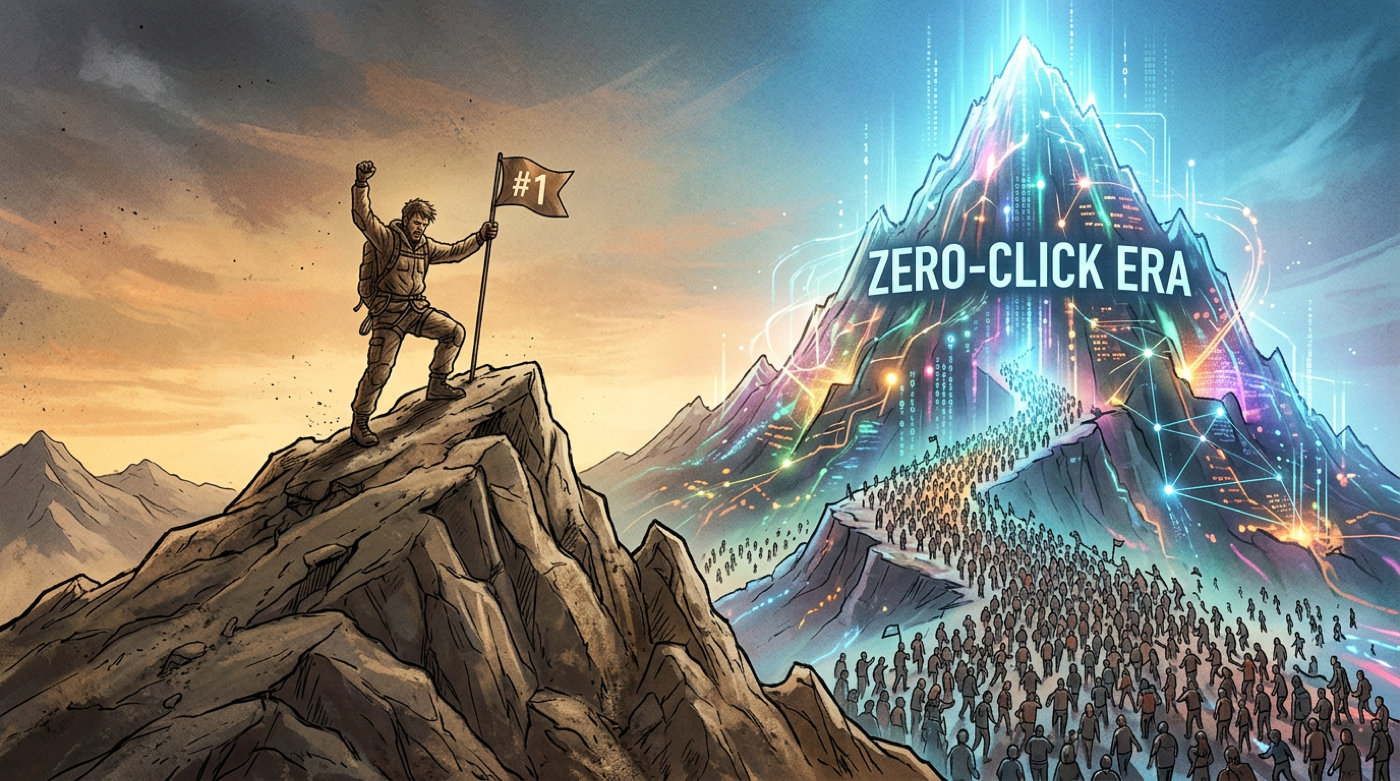
Strip away the specifics and this market leader's experience points to a single shift. Ranking #1 has gone from being the goal to being the floor. It is the price of entry, the thing that makes you eligible to be cited, not the thing that wins you the click. The real contest now is over whether you are the answer the machine repeats, and whether the human it repeats it to has any reason to trust the source.
If you take five things from this brand's data into your own strategy, make them these.
Audit your schema like it is code, because it is. A single wrong content type can quietly demote hundreds of pages. Validate it, and re-validate after every site change.
Re-baseline your KPIs for AI search. Track AI Overview presence, citation share, and branded-search lift, not just position and impressions, which now hide as much as they reveal.
Make your expertise machine-readable. Named reviewers, real credentials, citations to authorities, and the structured data to verify them are now table stakes in any YMYL niche.
Build answer-first and mobile-first. Most of your readers are on a phone, deciding in the first 20% of the page. Give them the answer immediately and earn the rest of the scroll.
Judge traffic by intent, not volume. Brand-safe, intent-matched clicks compound into trust. Vanity traffic just inflates a dashboard.
The brands that internalise this now will spend the next few years being recommended. The ones still optimising purely for the blue link will spend it wondering where their traffic went, even while they are still, technically, ranking #1.
Further reading
AI features and your website: Google's own guidance on how AI Overviews and AI Mode surface content, and the controls you actually have over it.
Article structured data (Article, NewsArticle, BlogPosting): The reference that explains why the content type you declare in schema matters, the exact issue behind the regression in this post.
Creating helpful, reliable, people-first content: Google's plain-language explanation of the E-E-A-T signals that decide who gets cited, especially in YMYL topics.
Web Vitals: The canonical breakdown of LCP, INP, and CLS, the three page-experience metrics referenced in the audit.
Work with Search Agency
If you work in a regulated or high-trust category and you are not sure how AI search is reshaping your visibility, that is exactly the kind of audit we run. We map where you are cited, fix the technical and authority signals that decide it, and rebuild content to be the answer rather than just a result.
See where your brand stands in AI answers today, benchmarked against your competitors, no pitch required.

How to Fix Crawled and Discovered Currently Not Indexed Pages in Search Console
Google found these pages, sometimes even read them, and still left them out of the index. How to tell the two Search Console statuses apart, and which fixes actually move them.
Read post →
How to Run ChatGPT Ads in Indonesia
ChatGPT ads are now open to Indonesian advertisers. We set up two campaigns in Ads Manager and documented every screen, from the first ad preview to the pixel and context hints.
Read post →
Augmented Visibility, How AI Recommendations Can Lead to Bad Business
AI assistants now build agency shortlists for buyers, and some of the sources behind them are paid rankings or lists an agency wrote about itself. What augmented visibility is, and how to check an AI-recommended agency before you sign.
Read post →