
Insights on AI search, GEO, AEO & technical SEO.
All posts
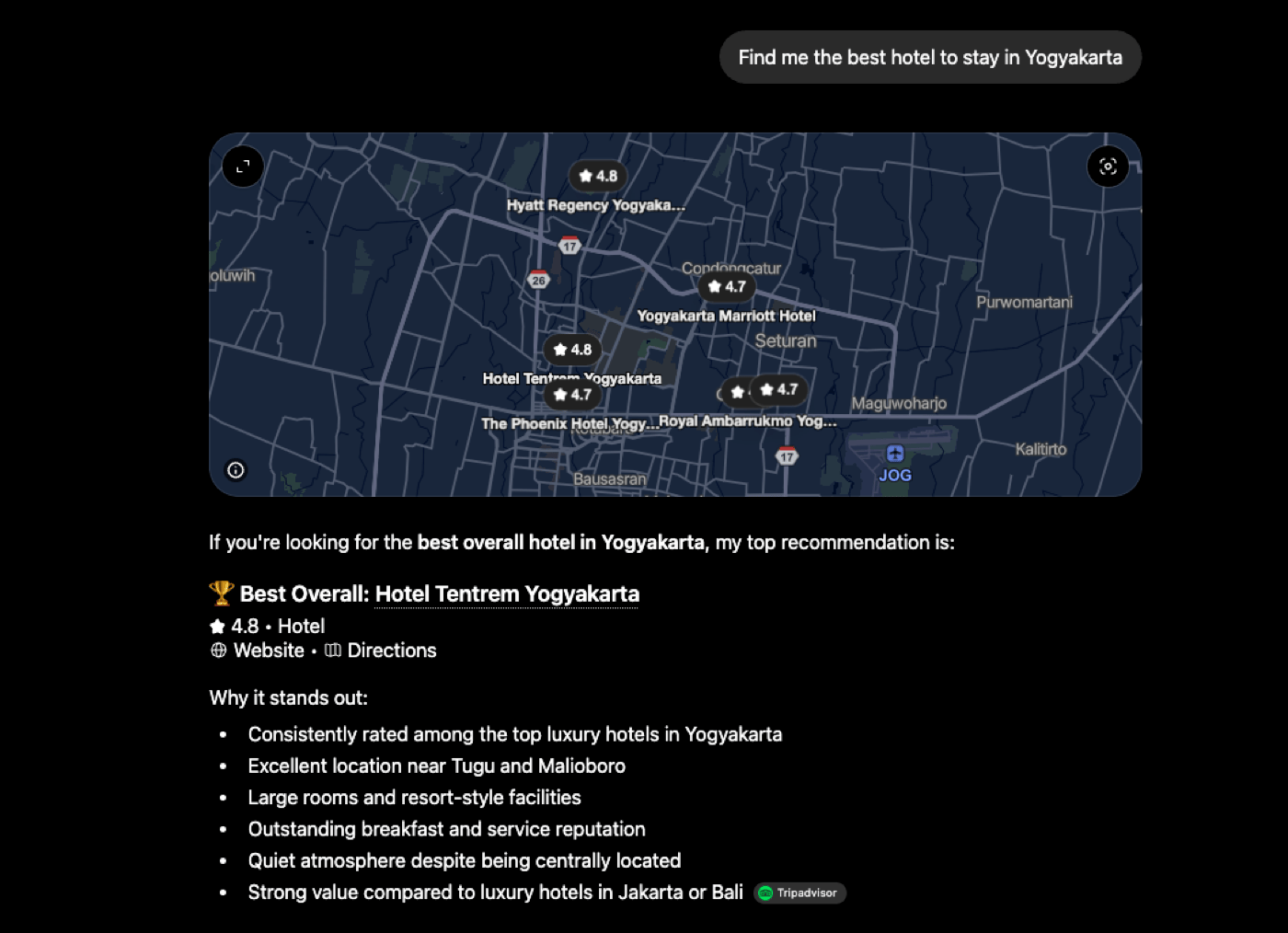
One Google Business Profile Decides Whether AI Recommends Your Shop
Ask ChatGPT where to get a phone screen fixed in South Jakarta, and it will name a few shops. Ask Gemini for a bakery that delivers wedding cakes, and it will pick favorites. Those answers are not guesses. They are assembled from structured sources, and your Google Business Profile is one of the richest the model has on you.
Read post →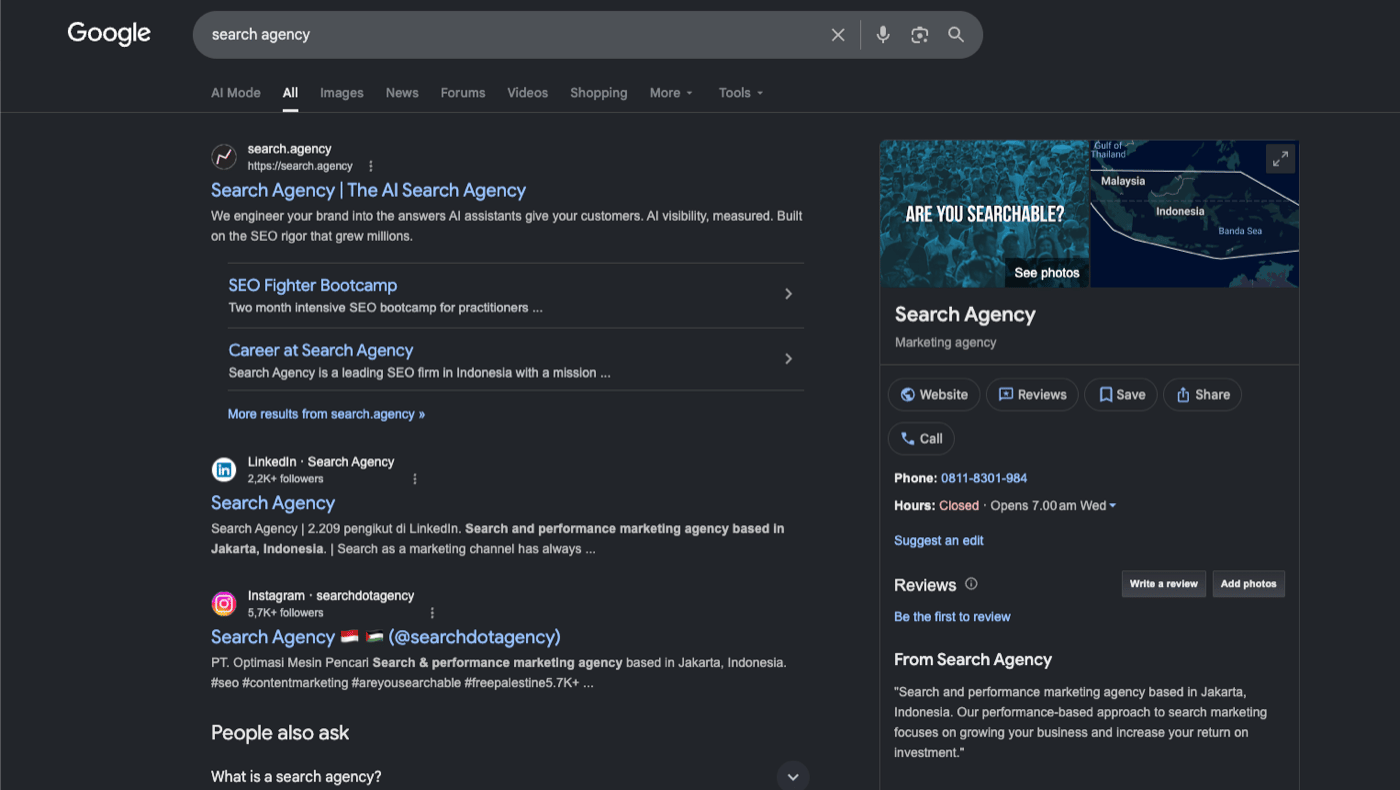
You Still Need to Rank in Traditional Search if You Want to Win the AI Search Battle
In early 2026, Lily Ray tracked 11 websites that lost organic visibility after a Google update. Every one of them also lost AI citations. Organic traffic fell 26.7% on average. AI citations fell 22.5% over the same window, and the per-platform drops tracked the organic drop almost line for line: Google AI Mode down 23.8%, ChatGPT down 27.8%.
Read post →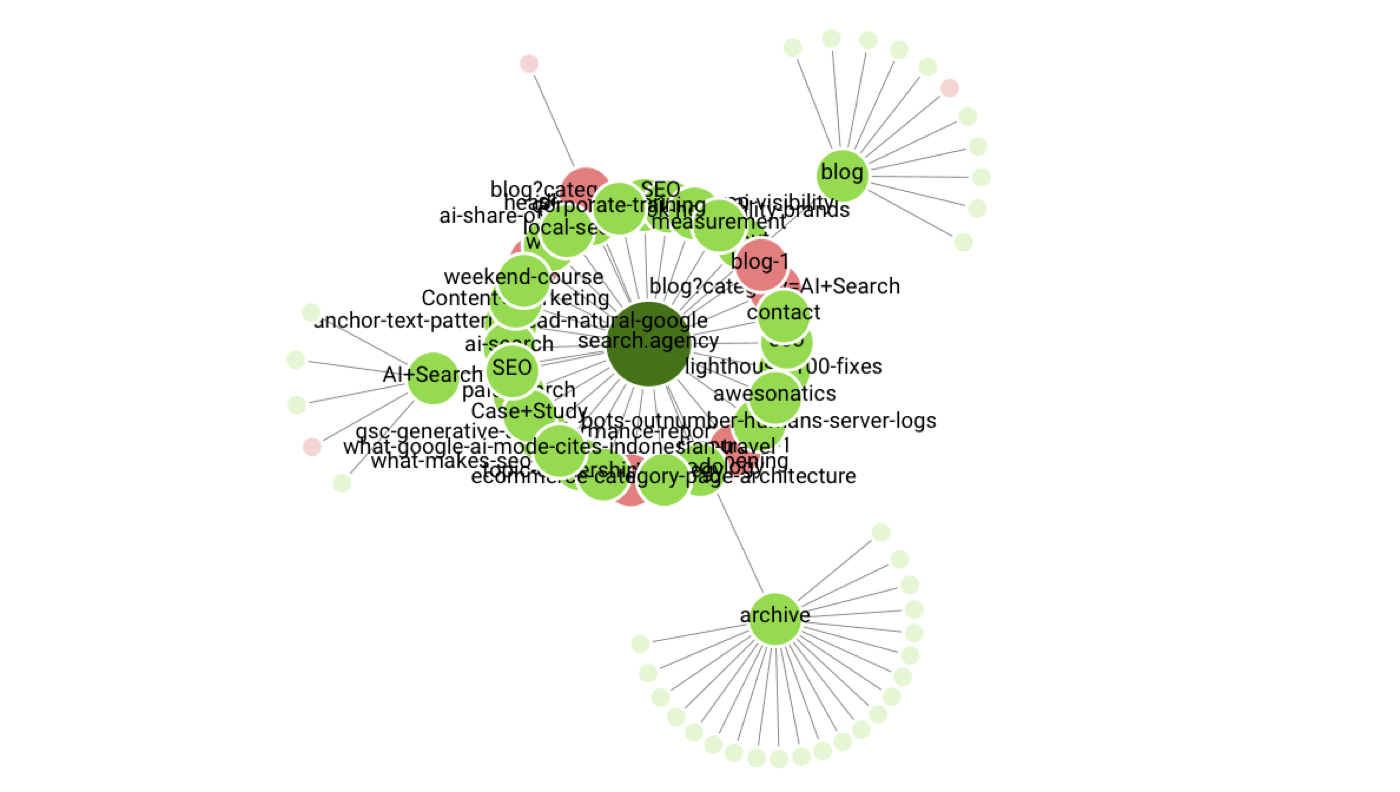
Your Audit Knows Where Pages Are Filed, It Cannot Tell You What They Mean
How do you know which pages on your site are topically stranded? Most audits answer that with folder structure. They group `/blog/`, `/services/`, `/guides/`, check that each has internal links, and call it done. That tells you how your URLs are filed. It tells you nothing about whether pages that should reinforce each other actually connect.
Read post →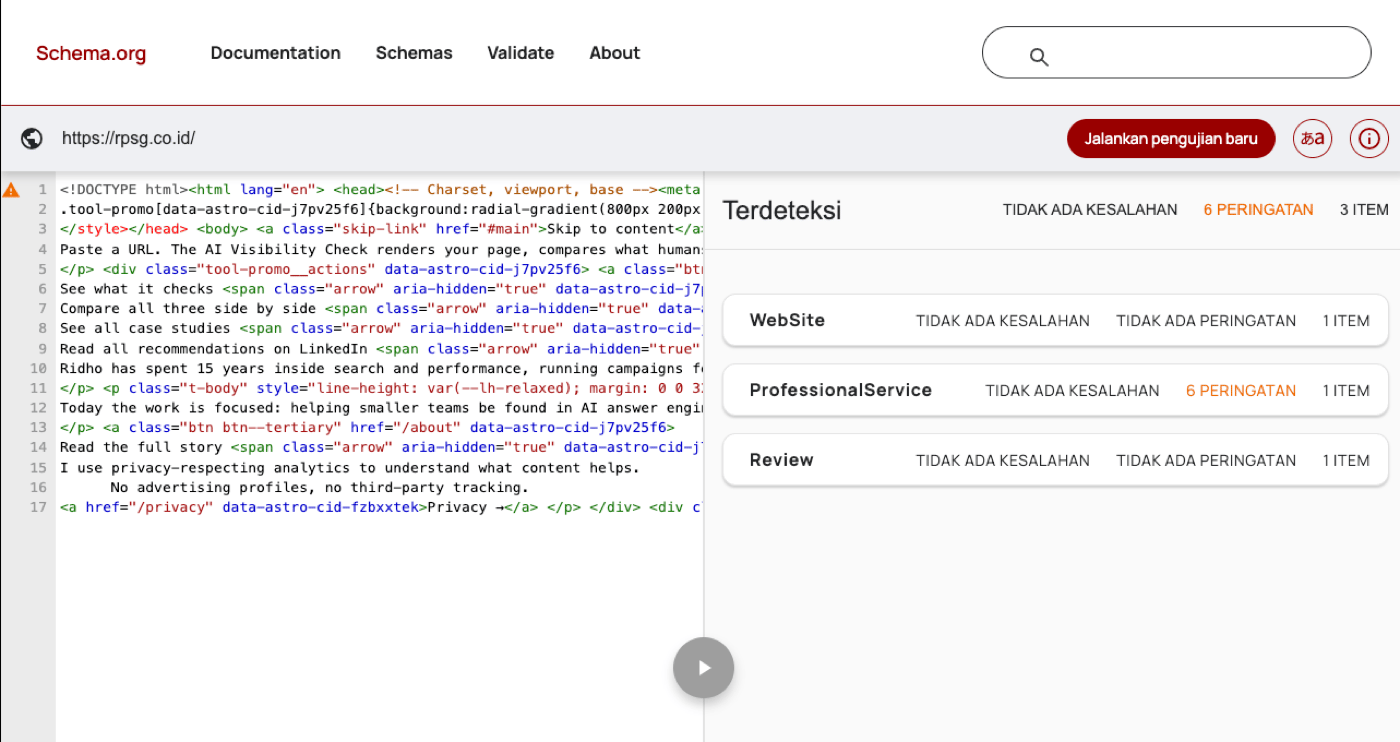
Schema markup won't get you cited by AI. Here is what it actually does.
The indirect path is plain SEO. Schema earns rich results and helps Google and Bing understand your pages. Those two indexes are exactly what AI Overviews and ChatGPT search retrieve from. AI Overviews are grounded in Google's ranking systems, and roughly [97 percent of them cite a source from the top 20 organic results](https://www.seoclarity.net/research/aio-rankings-overlap). If schema helps you rank and get indexed, it buys you a ticket into the pool the model draws from. The benefit is two steps removed, but it is not imaginary.
Read post →
You Are Competing Against Your Own Pages. Here Is What That Costs in AI Search.
Duplicate content has never carried a penalty. That is exactly why it goes unfixed for years. There is no warning in your dashboard, no manual action, no ranking drop you can point at on a Tuesday. The cost shows up somewhere else, as authority that should have stacked on one page spread thin across five, and as an AI assistant citing a version of your page you forgot you published.
Read post →
Which AI Crawlers to Block When Bots Are More Than Half Your Traffic
More than half of what your servers answer is now machines, and most AI crawlers take your content without sending anyone back. Here is how to tell the useful bots from the freeloaders.
Read post →
Your Rendering Strategy Sets Your INP Score and Your AI Visibility
Headless stacks built on Next.js, Nuxt, or Astro promise clean content APIs and fast deploys. Many of them ship a hidden tax. The browser receives a thin HTML shell, downloads a large JavaScript bundle, and rebuilds the page on the user's device. While that bundle parses and executes, the main thread is busy, taps and clicks queue up, and Interaction to Next Paint (INP) climbs into failing territory.
Read post →
How Hotel Brands Get Cited in AI Search (GEO Playbook)
Travellers now ask AI where to stay, and AI answers from sources most hotel brands have not built. The GEO playbook that earns hospitality citations.
Read post →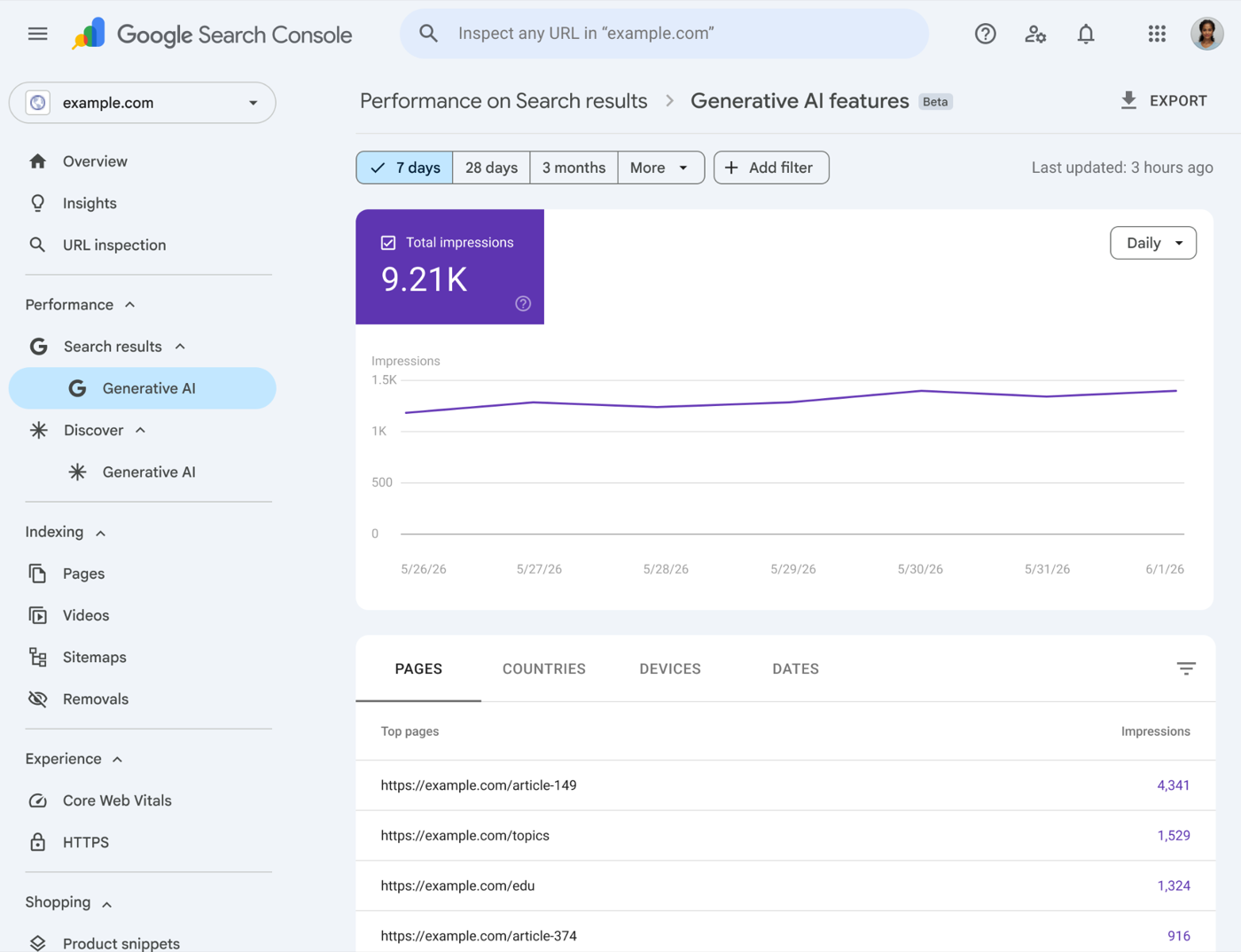
Google's New AI Performance Reports in Search Console
Google has given Search Console its first dedicated view of how pages perform inside its generative AI surfaces. Announced on June 3, the new Search Generative AI performance reports break out the impressions a site earns in AI Overviews and AI Mode, along with generative AI features in Discover, with breakdowns by page, country, device, and date down to hourly granularity.
Read post →
Information Architecture for Ecommerce Category Pages
Take any ecommerce store and rank its pages by the revenue they touch. Product pages convert, but they rank for narrow branded and model queries. The home page pulls navigational traffic that was already coming. The category page is the one asset that ranks for the high-intent commercial head term, the query a buyer types when they know what they want but not which one to buy. "Running shoes." "Air conditioner 1 PK." "Office chair ergonomic." That is where the money enters, and on most stores it is also the page nobody owns. It inherits whatever structure the platform shipped with, and that structure quietly decides whether the page ranks at all.
Read post →