
Insights on AI search, GEO, AEO & technical SEO.
All posts

Getting cited in AI Overviews tells you almost nothing about whether AI Mode can see you
Two Google surfaces answer the same query, agree on the answer about 86% of the time, and cite the same URLs only 13.7% of the time. That last number comes from Ahrefs, which compared 540,000 query pairs across AI Overviews and AI Mode. The gap is the whole story. A citation in AI Overviews is weak evidence, close to none, that AI Mode will surface you for the same search.
Read post →
What It Takes to Make Your Website Agent-Ready in 2026
The web was built for human eyes. An AI agent reads it differently. It parses the underlying structure rather than skimming the layout, and it wants a clean, machine-readable list more than a category page to look at. It also does more than read now, filling carts and paying on behalf of a person who never visits your site at all.
Read post →
What an AI Citation Is Actually Worth to Your Business
Every agency is posting AI citation screenshots like it is 2012 and they just hit rank one. A cited prompt is a nice moment, and worth almost nothing on its own. Here is what to measure instead.
Read post →
Search Console Now Shows Where AI Cites You, and Almost Nothing Else
Google added Generative AI performance data to Search Console, a view of how often your URLs appear in AI Overviews and AI Mode, alongside generative features in Discover https://developers.google.com/search/blog/2026/06/gen-ai-performance-reports. For the first time, you can see which of your pages are surfacing inside Google's AI answers. It is also one of the thinnest reports the tool has ever shipped.
Read post →
What 340 search specialists tell us about Indonesia's SEO talent
For the past few weeks we have been building searchbro*, an open index of the people who actually do search marketing in Indonesia. Not agencies, not tools, the practitioners. The technical SEOs, the content strategists, the people quietly running organic growth for the country's biggest brands.
Read post →
Your Highest-Priority SEO Fix Has Been Waiting Six Months
Edge SEO is how technical teams stopped waiting. Rather than changing the site at its origin, the codebase, the CMS, the database, you intercept the page at the CDN and change it on the way out. The fix lives on the network that already sits in front of every request, so it ships without a single deploy to your backend.
Read post →
We Asked Gemini Why It Doesn't Recommend Us for Jakarta SEO
We run an agency whose entire thesis is winning visibility inside AI answers, and the most-used AI assistant did not name us for our own city and our own category. So we kept asking, and what came back is the clearest lesson in AI visibility we have seen in months.
Read post →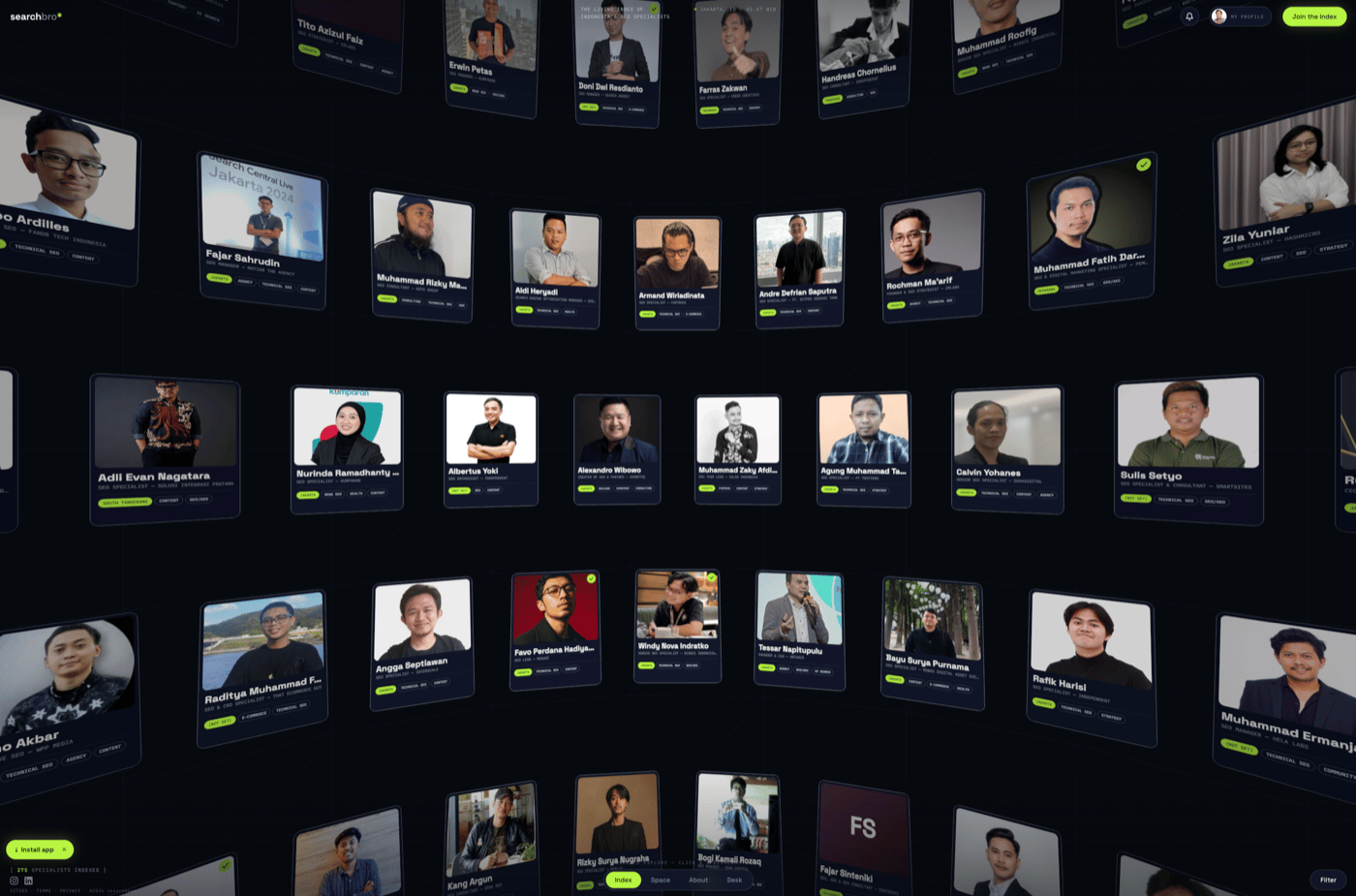
What a Senior SEO Found When He Read Our Source Code
A senior SEO manager at one of Indonesia's biggest tech companies opened searchbro.id, went to his own profile, and did the thing only an SEO does for fun. He viewed the page source. Then he left an approving note about the noscript fallback. For most people that sentence is gibberish. For anyone who has shipped a JavaScript site and watched it disappear from search, it is the whole story.
Read post →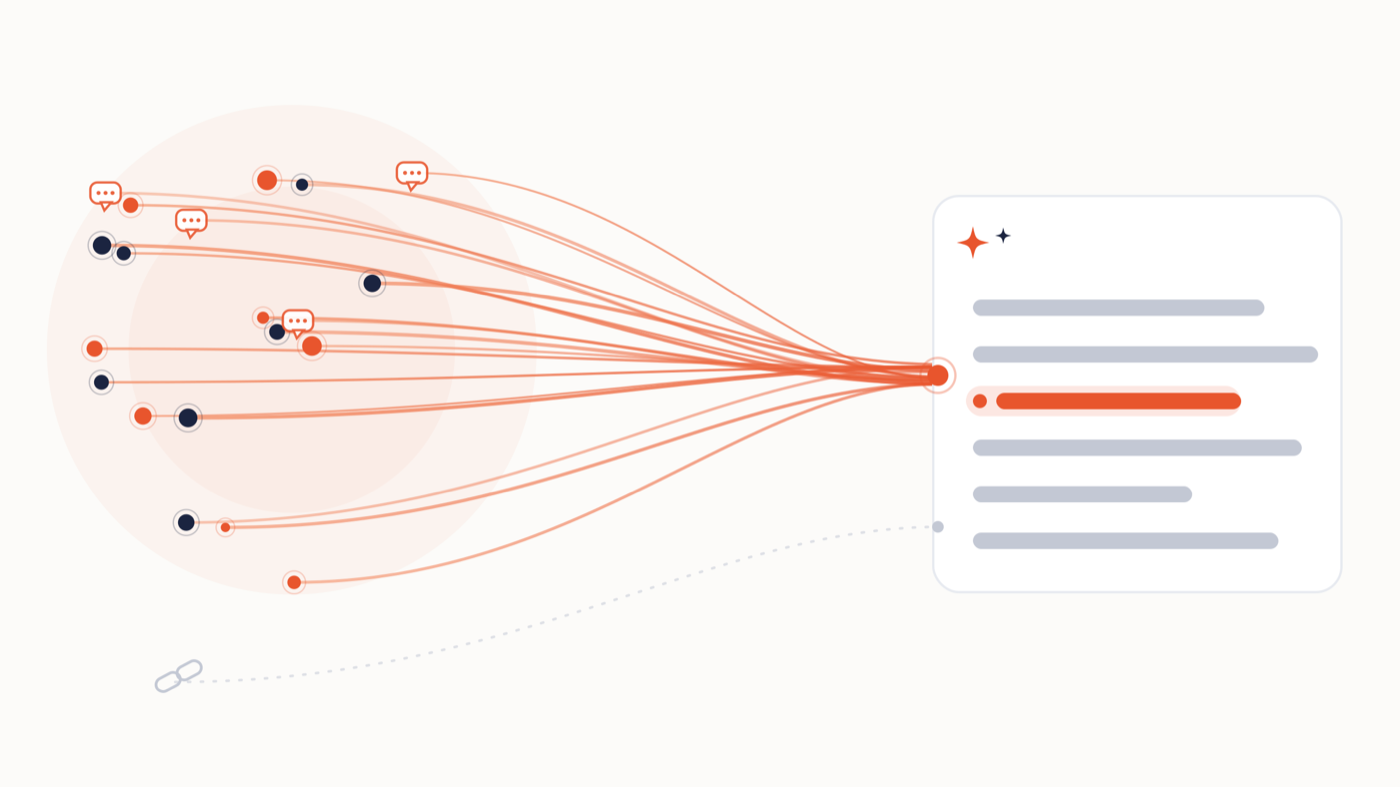
Put Your Link Budget Where AI Actually Looks
Two 2026 datasets put brand mentions far ahead of backlinks for AI visibility. Where to move your search budget, how far, and what to track to know it worked.
Read post →
A Clone of Your Store Can Win the Citation You Thought Was Yours
For a small or mid-sized brand the threat is not a lost sale. It is an AI engine recommending an impostor under your name, confidently, to a buyer at the exact moment of purchase. OpenAI pulled those specific sites from its index once they were flagged. The hole they slipped through is still open.
Read post →