
Insights on AI search, GEO, AEO & technical SEO.
All posts

How Prenagen Came to Own AI Search in Indonesia
Generative engines now answer many of the high-intent questions that brands once captured through traditional rankings. When an AI Overview resolves a query inside the results page, the underlying website often loses the click, even when it ranks well. Across the Indonesian maternal-health category, keyword visibility contracted by roughly 9% as this repricing took hold.
Read post →
When to Merge Pages and When to Keep Them Separate
Two URLs start trading places for the same query, one of them quietly losing a position it used to hold, and the team reaches the same verdict almost every time. Cannibalization. Merge them. A week later one page is redirected into the other, the report shows a problem closed, and nobody asks whether it was the right page, or even the right problem.
Read post →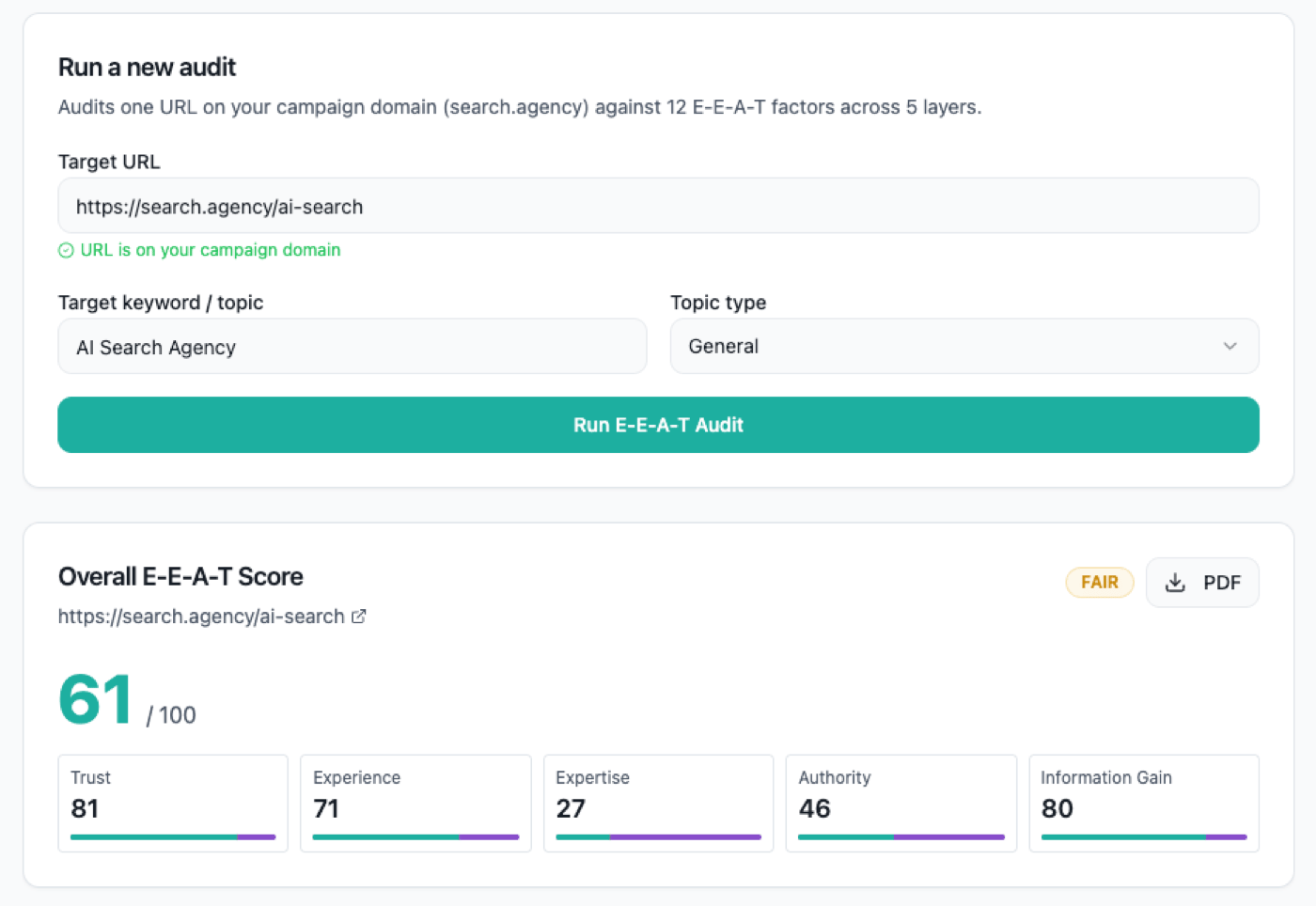
We Ran Our Own Page Through an E-E-A-T Auditor and Scored 61
We ran the page we use to sell AI search work, search.agency/ai-search, through StoryMint's E-E-A-T Auditor, and it came back with a 61 out of 100. Fair, not good. E-E-A-T is Google's shorthand for Experience, Expertise, Authoritativeness, and Trust.
Read post →
How to Build SEO Into Your Go-to-Market Strategy (Not Bolt It On Later)
Build SEO into your go-to-market plan the way you build in sales or paid: as a demand channel with a job to do, sequenced to your company stage, anchored to a real buyer and a real pain, and now optimized for AI answer engines as well as the ten blue links. The startups that treat search as a launch-day input win compounding pipeline. The ones that treat it as something to switch on later spend year two paying for the months they skipped.
Read post →
The Startup Founder's Guide to Realistic SEO ROI in Indonesia
What SEO actually returns for an Indonesian startup: a worked 12-month ROI model in rupiah, the payback period, and when SEO beats paid search.
Read post →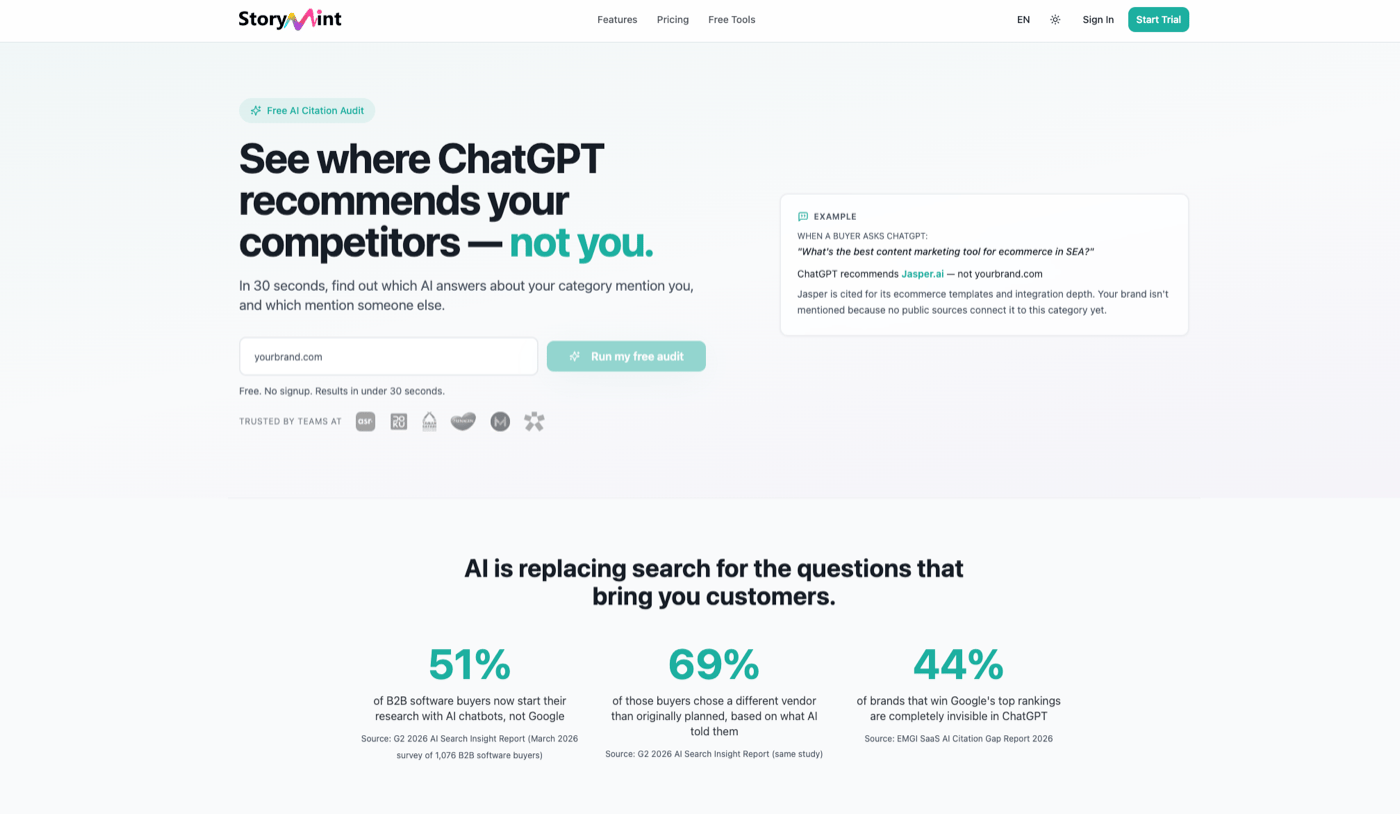
How to Run a Persona-First Content Gap Analysis With StoryMint
A persona-first content gap analysis finds the questions your audience is asking that the current search results fail to answer. That is a different exercise from the gap analysis most teams run, which finds the keywords competitors rank for and you do not. Both go by the same name. Only one of them tells you what to actually say.
Read post →
Decision Frameworks Are the Content Format AI Search Rewards
A decision framework is a piece of content that walks a reader through choosing between options, scored against weighted criteria so the tradeoffs are explicit instead of implied. It is also one of the most reliably cited formats in AI search, because it answers the exact shape of question generative engines are built to resolve.
Read post →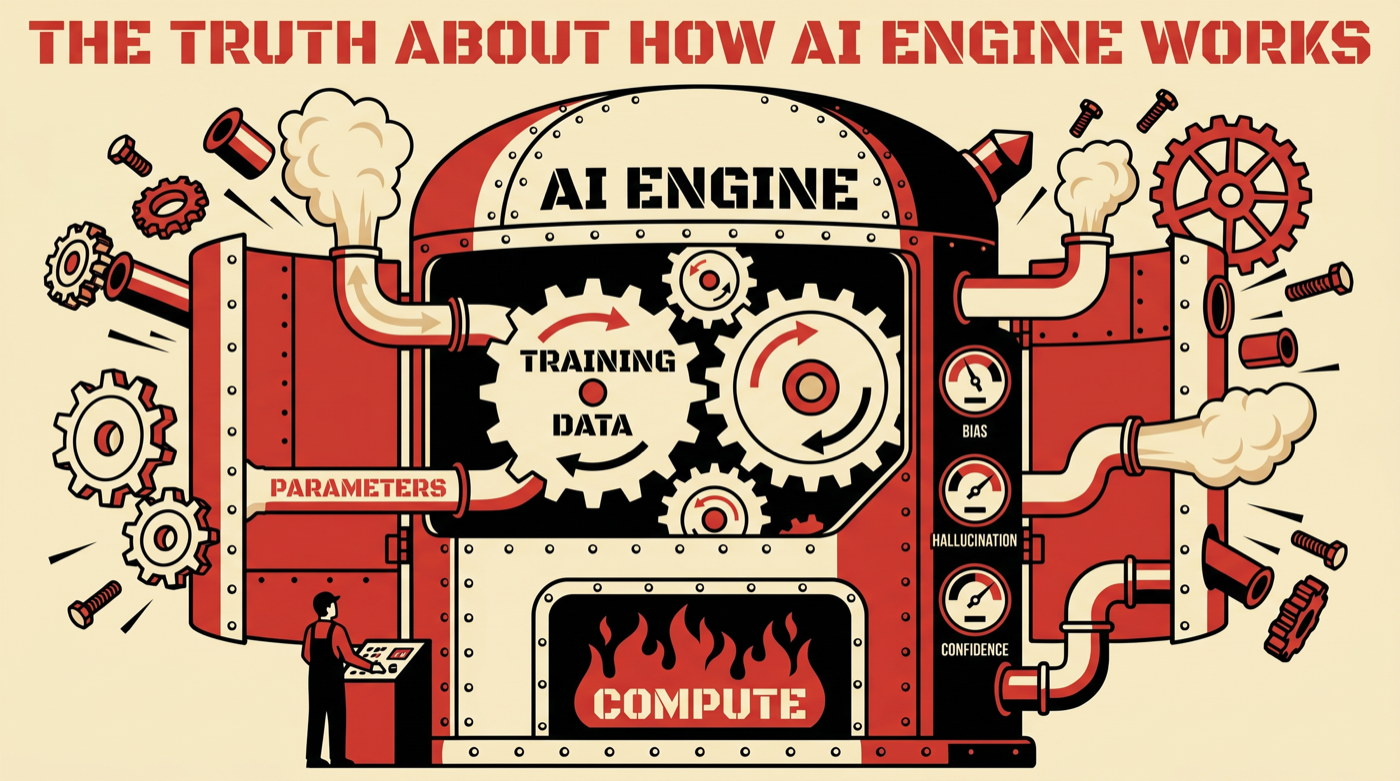
No Two AI Engines Read Your Prompt the Same Way
Type one sentence into an AI engine and it almost never searches for that sentence. It quietly rewrites your prompt into a handful of other queries you never see, runs them, reads what comes back, and hands you a single answer stitched from sources you were never shown choosing. That hidden step is where AI visibility is won or lost, and most GEO advice skips straight past it as if every engine did it the same way.
Read post →
What Screaming Frog Can Really Do Once You Connect It to Claude
Most Screaming Frog tutorials stop at broken links and missing meta descriptions. That is the warm-up. The tool earns its license fee on the layer underneath, the canonical logic, the rendering gaps, the international signals, and above all the moment you stop treating the crawl as the answer and start treating it as one input among several. On enterprise sites, the real wins live where crawl data meets Semrush and Search Console.
Read post →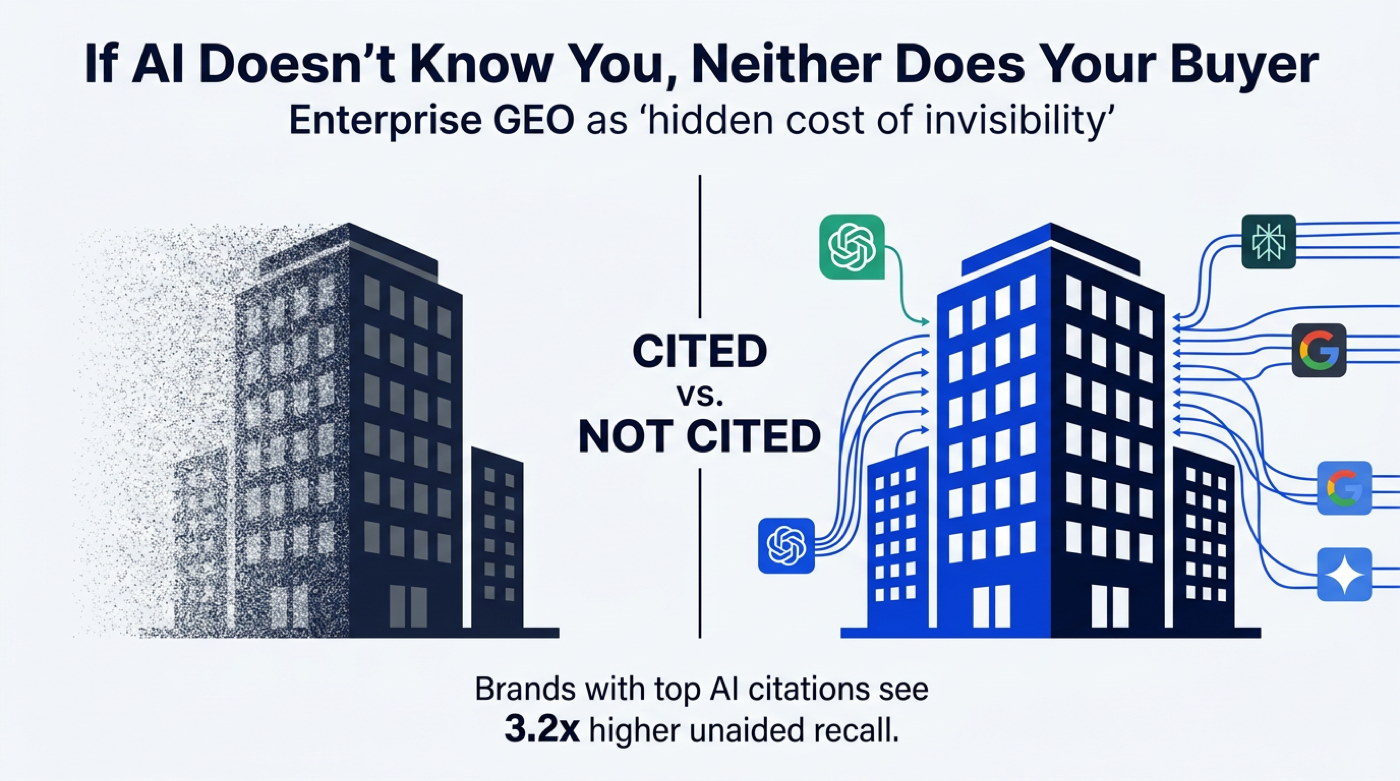
Enterprise GEO: How to Roll Out AI Search Optimization Across a Large Site
Enterprise GEO is the practice of operationalizing generative engine optimization across a large site, so that thousands of pages, multiple teams and several markets all produce content that AI engines can cite, consistently and at scale. On a small site, GEO is a checklist you apply by hand. On an enterprise site, the same checklist applied page by page never finishes, so the work shifts from doing GEO to building the system that does GEO for you.
Read post →