
Google's New AI Performance Reports in Search Console

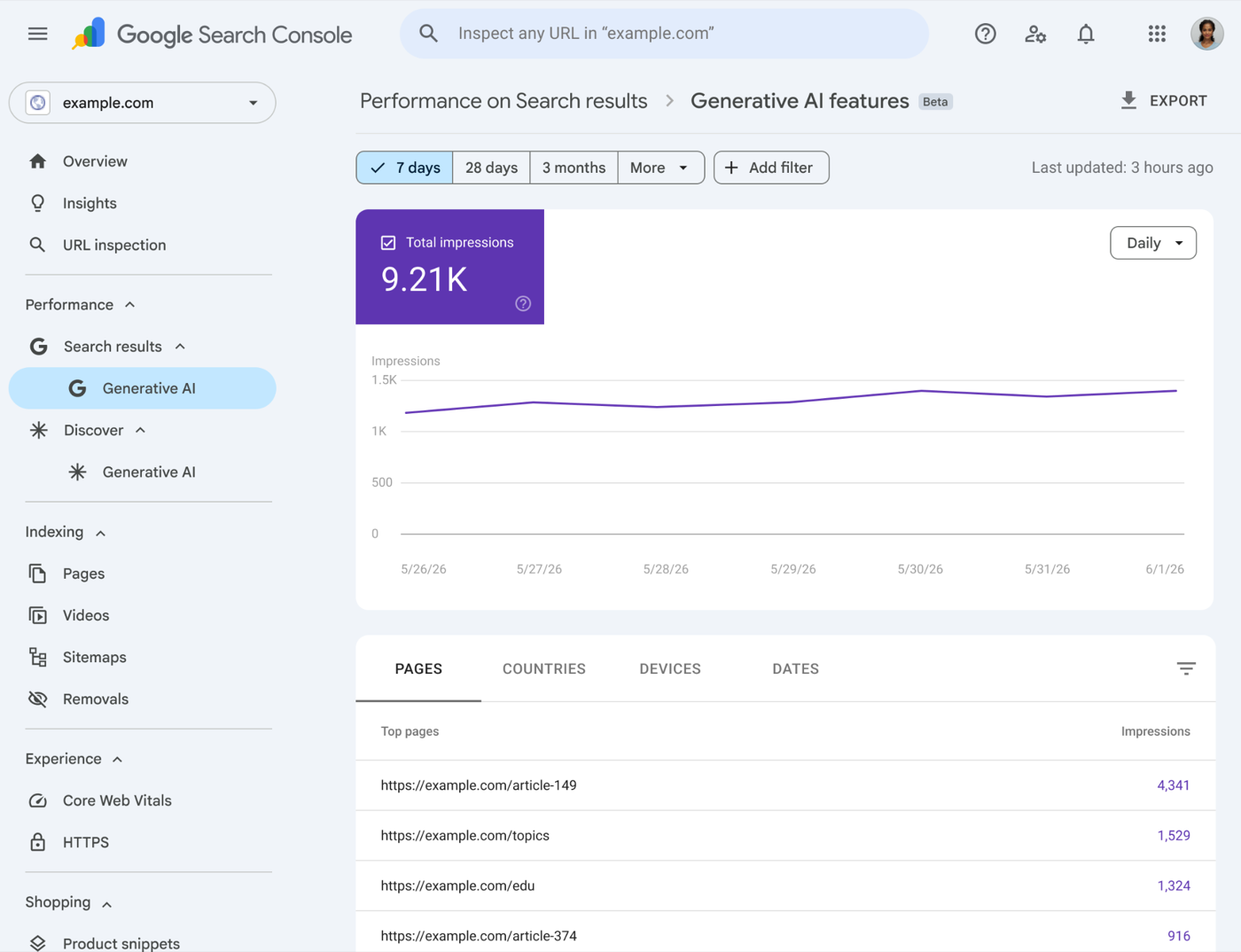
Google has given Search Console its first dedicated view of how pages perform inside its generative AI surfaces. Announced on June 3, the new Search Generative AI performance reports break out the impressions a site earns in AI Overviews and AI Mode, along with generative AI features in Discover, with breakdowns by page, country, device, and date down to hourly granularity. Google is rolling it out to a subset of site owners, with a wider release to follow.
For anyone who has spent the last two years estimating AI visibility from third-party tools and server logs, first-party data straight from Google is a real step forward. The detail worth reading closely is what the report leaves out.
Impressions, but no clicks and no queries
The report counts how often your URLs appeared in AI features. It does not report clicks, and it does not report the queries that triggered the appearance. A Google spokesperson told Search Engine Land the company is still working out which insights will be most useful, which reads as a signal that click and query data are not arriving soon.
That omission is not a footnote. It defines how the data should be used. An impressions-only feed reports presence, not traffic. It confirms whether your content is being surfaced in AI answers and on which pages, which is the share-of-voice question that matters most for AI search visibility. It cannot tell you what that presence is worth in sessions or revenue, and it cannot tell you which prompts you are winning. Teams already running prompt-level visibility testing should keep doing it; the Search Console feed validates presence at the URL level without replacing query intelligence.
A blocking toggle that forces a choice
Shipping alongside the report is a control that deserves as much attention as the metrics: a toggle that blocks a site's content from appearing in AI Overviews, AI Mode, and AI Overviews in Discover, while leaving it in classic Search results.
This is the decision the report is meant to inform. Publishers worried that AI answers cannibalise clicks now have a lever to pull, and pulling it is rarely the right move for a brand whose goal is to be the cited source a buyer reads before reaching any website. Presence in the AI response is increasingly the visibility, even when no click follows. The control works best as a scalpel for specific content types rather than a blanket setting, and the impressions report is what should tell you which content, if any, is worth withholding.
Treat the new report as a presence monitor and a baseline. Pull it the moment access arrives, record where you already appear, and set it against the click and conversion data you already hold so you can start estimating what AI presence is worth to the business. Joining first-party impression data to your own outcome metrics is the substance of measuring AI's contribution honestly, and it is where much of the next year of GEO strategy will be decided.
See where your brand stands in AI answers today, benchmarked against your competitors, no pitch required.

How to Run ChatGPT Ads in Indonesia
ChatGPT ads are now open to Indonesian advertisers. We set up two campaigns in Ads Manager and documented every screen, from the first ad preview to the pixel and context hints.
Read post →
Augmented Visibility, How AI Recommendations Can Lead to Bad Business
AI assistants now build agency shortlists for buyers, and some of the sources behind them are paid rankings or lists an agency wrote about itself. What augmented visibility is, and how to check an AI-recommended agency before you sign.
Read post →
How 16 Indonesian Nutrition Brands Score on AI Search Authority
We scored 16 of Indonesia's biggest milk and nutrition brands on the graph signals that decide whether AI search names them. The category average was 19.9 out of 100, and no brand has built the foundation yet.
Read post →