
Put Your Link Budget Where AI Actually Looks

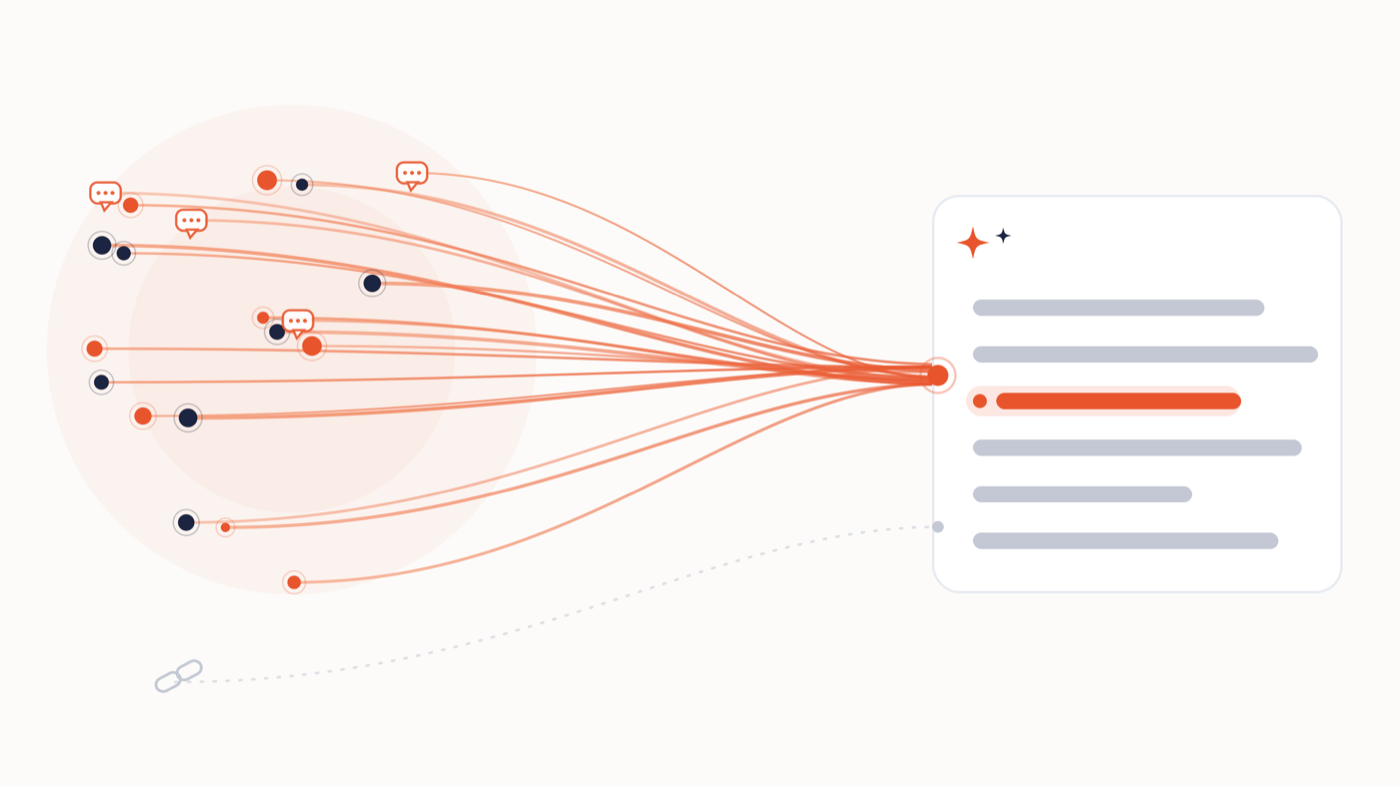
Two datasets landed this month, both pointing the same direction, and both arguing against how most teams spend. ConvertMate ran more than 80 million citations across 10,000-plus domains and found brand web mentions correlate 0.664 with AI visibility, with brand search volume at 0.334 (ConvertMate). A separate Ahrefs analysis of roughly 75,000 brands put web mentions at 0.664 against 0.218 for backlinks (via Wellows). Mentions track AI visibility about three times as tightly as links do.
For a growth lead deciding where next quarter goes, that is an awkward number, because the budget is almost always pointed at links.
How strong these numbers really are
These are correlations, not controlled experiments, so read them with that in mind. A 0.664 is a strong relationship for messy field data at this scale. A 0.218 is a weak one, real but faint. Neither proves that adding a mention causes a citation. What makes them useful is that two independent teams, different methods and different samples, landed on the same ranking of signals.
| Signal | Correlation with AI visibility | Read |
|---|---|---|
| Brand web mentions | 0.664 | The strongest lever the data found |
| Brand search volume | 0.334 | Demand for your name shows up in answers |
| Backlinks | 0.218 | Still positive, far weaker than either |
Read straight, the table ranks links last of the three things you could fund, and it puts two signals that have nothing to do with your backlink profile above them. That is the finding worth sitting with.
Why a sentence moves more than a link
The mechanics explain the gap. Classic search read the link graph, where a backlink was a vote and PageRank counted the votes. Language models do not work from that graph. They build a model of your brand from how language uses it: which topics, problems, and competitors your name sits next to, and how often.
An unlinked sentence in a trusted publication, the kind that says your brand is what teams reach for in a given situation, feeds that model directly. The model learns the association whether or not a hyperlink is attached. A backlink feeds a structure the model now weights lightly. This is why unlinked mentions, the thing classic SEO could never get credit for, turn out to be the signal that moves AI visibility most. Links still help discovery and still validate a claim. They stopped being the main input.
Mentions and citations do different jobs
The two words get used interchangeably and should not be. A mention is your brand named in content, with or without a link. A citation is a source the AI actually pulls from and often links in its answer.
They do different work. Mentions build recognition, teaching the model that you exist and what you are for, which is what gets you into the shortlist an assistant assembles. Citations, when linked, drive the click and the referral visit. AirOps found that brands earning both a mention and a citation were 40% more likely to reappear in the next answer than brands with only one (AirOps). You want both, and they come from different work. A mention puts you on the shortlist an assistant builds. The linked citation is what sends a reader to your site.
How to move the budget without overcorrecting
The wrong response to this data is to gut link building and call it strategy. A 0.218 correlation is weak, not zero, and links still do real work in discovery and validation. The better response is to shift the marginal dollar toward mentions while keeping the link work that still earns its place.
In practice that means three changes. Fund the things that earn mentions: digital PR, expert commentary, original data other people quote, and a real presence in the publications and communities your buyers and the models both read. Keep the editorial links you would earn anyway, and cut the spend that 0.218 cannot justify, the paid directories and link exchanges that were always thin. And feed brand search, the 0.334 signal, since the demand generation that makes people search your name by hand also surfaces you in answers.
This reweights your spend toward the signals the evidence ranks higher.
The trap on both ends of the correlation
There are two ways to misuse a number like this. One is to dismiss the weak signal entirely and stop doing the link work that still aids discovery. The other, more tempting, is to treat 0.664 as proof and pour everything into mentions as if the citation were guaranteed to follow. A correlation this size is enough to justify moving budget toward mentions, provided you keep checking whether the citations actually follow.
What keeps the reallocation grounded is measuring your own numbers rather than trusting the industry average. A study across 75,000 brands can point you in a direction. Whether your own visibility actually moved is something only your measurement will tell you.
What to track monthly to know it worked
Four numbers tell the story, and a senior team should see them every month.
Brand mention frequency, linked and unlinked, across ChatGPT, Gemini, Perplexity, and Google AI Overviews.
Citation share of voice against your named competitors, not in isolation.
Sentiment of those mentions, because a rising count of negative ones is a problem wearing the mask of progress.
AI-attributed traffic in GA4, with ChatGPT and Perplexity referrers filtered out and a "how did you hear about us" field to catch what referrers miss.
The pattern to watch for is mentions and share of voice climbing while AI-attributed traffic follows them up. If mentions rise and traffic does not, the reallocation is working but your pages cannot be cited, which is a content and structure fix rather than a budget one.
The first three of those are what our free AI Visibility Audit measures directly: how often the assistants mention you, your citation share of voice against three competitors, and the sentiment behind both, across ChatGPT, Gemini, Perplexity, and AI Overviews. Talk to us and we will show you where your name actually stands before you move a rupiah of the budget.
See where your brand stands in AI answers today, benchmarked against your competitors, no pitch required.

How to Run ChatGPT Ads in Indonesia
ChatGPT ads are now open to Indonesian advertisers. We set up two campaigns in Ads Manager and documented every screen, from the first ad preview to the pixel and context hints.
Read post →
Augmented Visibility, How AI Recommendations Can Lead to Bad Business
AI assistants now build agency shortlists for buyers, and some of the sources behind them are paid rankings or lists an agency wrote about itself. What augmented visibility is, and how to check an AI-recommended agency before you sign.
Read post →
How 16 Indonesian Nutrition Brands Score on AI Search Authority
We scored 16 of Indonesia's biggest milk and nutrition brands on the graph signals that decide whether AI search names them. The category average was 19.9 out of 100, and no brand has built the foundation yet.
Read post →