Zenius Chooses Search Agency for SEO and AI Search

Zenius has appointed Search Agency to run its SEO and AI search program. The work started in November 2026 and runs for six months. It covers technical SEO, content, structured data, and visibility in AI answers, with the Zenius business and developer teams working alongside ours.
The program begins with the technical SEO brief Zenius brought to us. A learning platform with thousands of lessons, practice questions, and exam discussions only earns search traffic when Google can crawl, render, and index that material cleanly. The same pages then need to be readable by the AI assistants that students and parents increasingly ask instead of a search box.
Who Zenius is
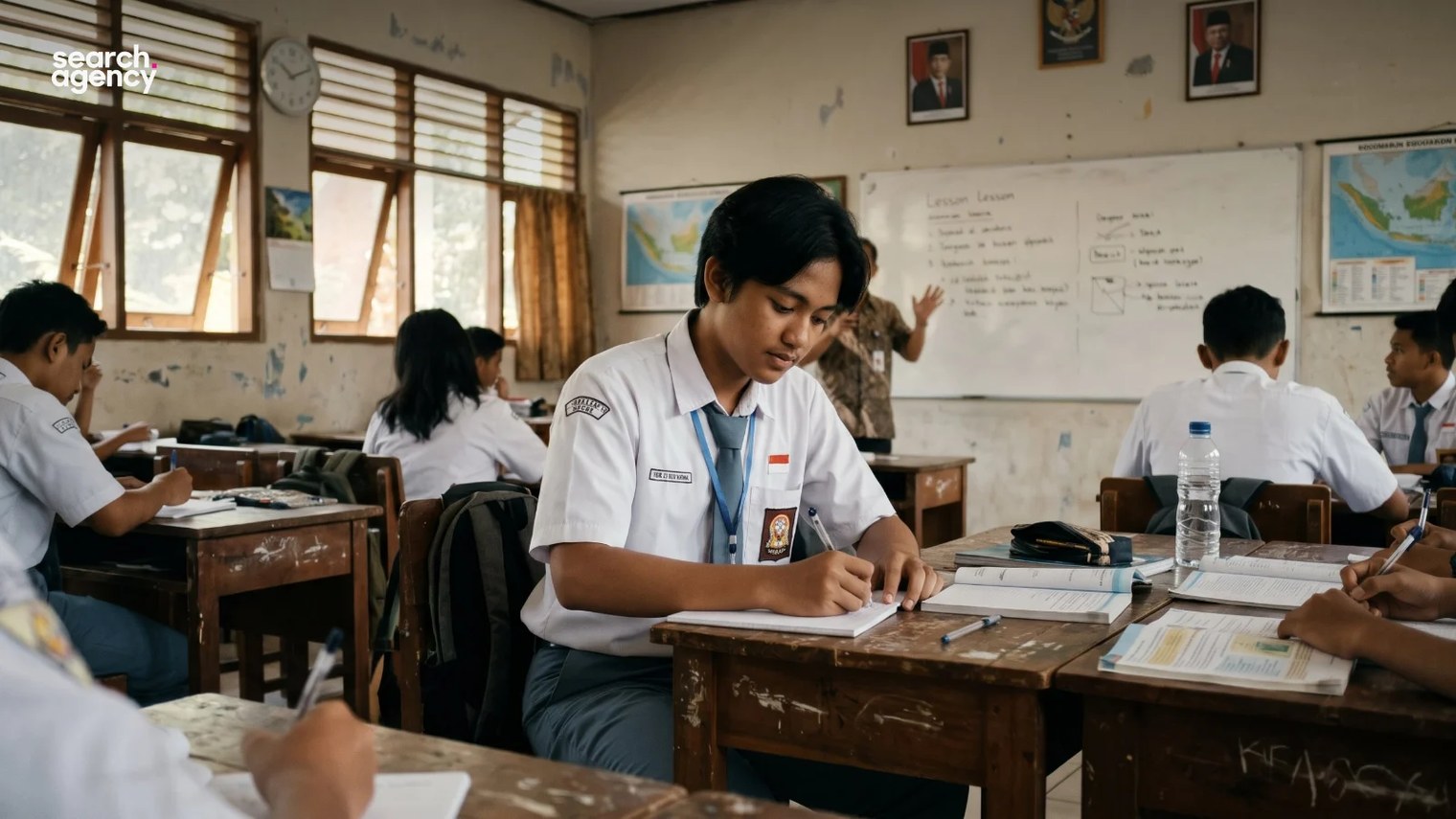
Zenius is an Indonesian online learning platform for students from grade 1 of primary school through grade 12 of senior high school. Its library covers Mathematics, Natural Science, Social Science, Bahasa Indonesia, and English, mapped to the KTSP, Kurikulum 2013, and Kurikulum 2013 Revisi curricula. Students use it on the web and through an Android app.
The brand has a long history with Indonesian exam preparation. Its site records discussion material for national and university entrance exams going back to 2002, including SBMPTN, SIMAK UI, UM STAN, and UTUL UGM. Reporting from January 2024 noted that the company had passed 16 million users by December 2020.
That history matters for search. A brand that has answered student questions for over two decades holds a deep archive of material. The first job of the program is to make every valuable page in that archive visible to Google and to AI engines.
Why the program starts with technical SEO
Education platforms share a set of technical problems that quietly cost organic traffic. Lesson pages are often rendered by JavaScript, which means Googlebot has to execute code before it can read the content. Practice questions and video lessons sit behind a login or a subscription, where a crawler may meet a wall in place of the lesson a student sees. Filters, pagination, and duplicate parameter URLs multiply the number of pages Google has to crawl without adding anything new.
Google has been clear that it handles these cases only when sites follow its guidance. Content behind a paywall needs paywalled content structured data to tell Google a subscription page apart from cloaking. JavaScript sites need to pass a rendering check because content that only appears after a script runs can be indexed late or not at all.
Zenius already runs its brand and digital PR work through an internal team. Our scope covers the layer underneath. We fix what sits between the content and the index, build the structured data layer, and then make the content answer questions directly. Our SEO service and AI search practice run as one program here because in 2026 the same page has to satisfy both.
What the six month program covers
The work is organized in four streams that run in parallel after the first month.
- Strategic development, which means market and competitor research, a keyword and prompt taxonomy, an AI visibility audit across ChatGPT, Gemini, Perplexity, and Google AI Overviews and AI Mode, and a citation source analysis for the questions that matter most to Zenius.
- Technical optimization, starting with a full crawl, a JavaScript rendering check, and a technical audit, followed by developer ready recommendations and post implementation validation in Google Search Console.
- Content optimization, covering a monthly batch of existing pages rewritten to answer their target question directly, plus new Bahasa Indonesia articles built on a hub and spoke structure.
- Measurement, with monthly prompt tracking, a shared KPI tracker, and a monthly performance report that the Zenius digital marketing team can read without a translation layer.
The first month is a baseline month. We export Search Console data, check GA4 conversion events such as registrations and purchases, crawl the site, and audit the content inventory before any recommendation is written. Targets for conversion and acquisition are set at the end of that month from real numbers and reviewed with Zenius before they go into the tracker.
The structure follows the same methodology we use for every client. The research stream feeds our Topic Ownership Strategy, where content decisions start from the questions students ask.
How we work with the Zenius developer team
Technical SEO only produces results when developers can act on it. Every recommendation is therefore written as a product requirement document (PRD) that states the problem, the affected URLs, the fix, and the criteria that mark it as done. Indexing blockers such as robots rules, noindex conflicts, canonical errors, and sitemap hygiene go into the first sprint. Internal linking, redirect chains, and duplicate parameter URLs follow in the second.
We join the developer syncs, answer questions on each PRD, and review changes on staging before release wherever a staging environment exists. After a release we validate the fix through URL Inspection, the page indexing report, and a re-crawl. The result goes into the monthly report. Toward the end of the program we hand over an SEO release checklist and run it with the team on a live release, which keeps the gains in place after the engagement ends.
This is the same approach we described in what an AI search audit should change in your marketing plan.
Structured data for a learning platform
Learning content has its own structured data vocabulary. Google supports Course markup and a range of education Q&A types for practice questions and solutions. The paywalled content markup above tells Google which part of a page is free and which part needs a subscription.
For Zenius this layer does three jobs. It lets Google show lesson and question pages with the right context in results. It tells AI engines what entity sits behind the page through Organization markup connected to verified profiles. And it gives us a clean way to keep subscription lessons indexable without exposing the full content, a pattern we have already applied on a national news publisher with a paywall.
Entity work runs alongside the markup. AI assistants decide which brands to name partly from how consistently a brand is described across its own site and the wider web. A platform with a twenty year history has more of those descriptions in circulation than most, and part of the audit is reconciling them into one clear entity record.
How Zenius and Search Agency will measure the program
Two sets of numbers sit in the shared tracker. The first is the conventional set, which covers indexed pages, impressions and clicks by page group, organic registrations, and purchases attributed to organic search. The second is the AI search set. It counts how often Zenius is cited or recommended in AI answers for the prompts in the taxonomy, tracked monthly across the engines in scope.
The baseline is captured before any fix ships, which is why the first month carries no targets. Once the targets are agreed in week four, every monthly report compares against them and against the baseline. A full re-crawl and AI visibility re-audit at month six closes the program. The Zenius tracker follows the approach in the search measurement contract every search engagement needs.
Results will go on our work page once the program has data worth sharing and Zenius agrees to publish them.
What this means for Indonesian education brands
Zenius is the first education platform in Search Agency's client list, which has so far been weighted toward FMCG, media, hospitality, fintech, and travel. The problems are familiar even in a new vertical. Large content archives, JavaScript heavy templates, and subscription walls are the conditions under which Google indexes less than a site deserves. They are also where AI engines end up citing a competitor's free page.
Education search in Indonesia is also shifting toward questions. A student preparing for UTBK asks an assistant to explain a concept or to check a worked answer. The platform whose page is readable, structured, and attributed is the one that gets named. The Zenius program is built to close that gap, and most Indonesian learning brands share it today.
If you run an education or edtech platform and want to know how much of your content Google and AI engines can read today, our free AI search audit measures it. The Agent View extension gives a first reading in your own browser, or you can book a call with our team directly.
See where your brand stands in AI answers today, benchmarked against your competitors, no pitch required.
Related reading
All posts →
SEO Quick Wins for Tech Startups (A 6-Month Market Penetration Guide)
A new startup does not have twelve months to wait for SEO. Here is how to fix the technical foundation and rank for winnable keywords inside a six-month runway.
Read post →
How We Unlocked Organic Growth for Taman Safari Indonesia
We helped Taman Safari Indonesia turn offline magic into online momentum. In six months, technical fixes, story-led content, and unified landing pages lifted clicks 86% and impressions 62%—with higher CTR and better average position. Here’s the narrative of what changed and why it worked.
Read post →
The technical work that decides whether AI search can use your pages
Most AI search advice skips the part that actually decides visibility, whether an answer engine can reach, render, and read your pages. This is that part.
Read post →