
GEO vs SEO: Is SEO Dead in the Age of AI Search?
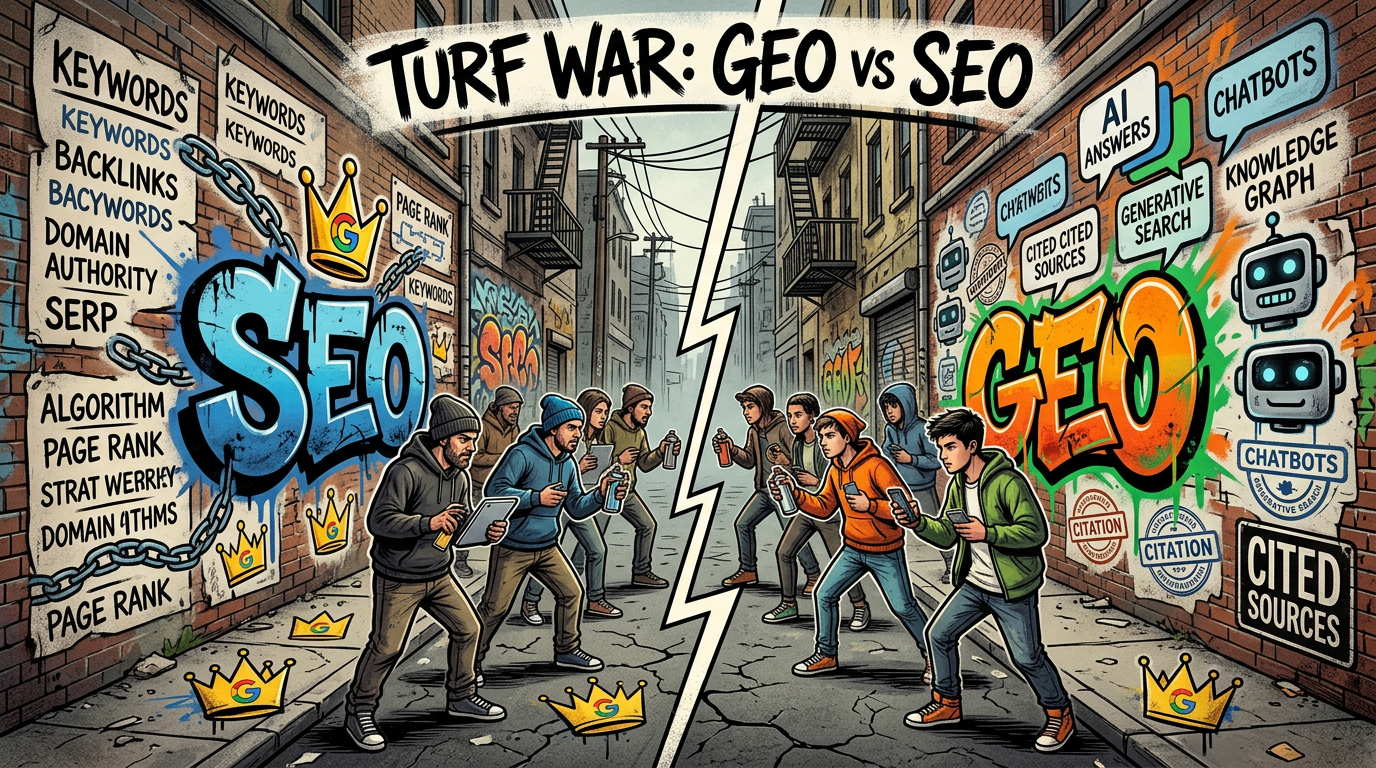
SEO is not dead. It is being absorbed into something larger. The honest answer to "GEO vs SEO" is that they are not rivals, they are two layers of the same job: SEO gets your content found by the engines, and GEO gets it quoted inside the AI answers those engines now write. The brands that treat this as a fight will pick the wrong side. The brands that treat it as one program will win both.
I want to make the case plainly, because I keep hearing two wrong stories. One says AI has killed SEO and you should stop investing. The other says nothing has changed and AI search is hype. Both are comfortable, and both are wrong.
Is SEO dead?
No, SEO is not dead, but the destination has changed. People still search constantly, arguably more than ever, but a growing share of those searches end in an AI-written answer rather than a click to a website. SEO that only optimizes for the click is optimizing for a step that is quietly disappearing.
What is dying is a narrow version of SEO: chase a keyword, rank a thin page, harvest the click, repeat. That model was already weakening before AI. AI just made its decline obvious. The discipline of being the most relevant, trustworthy, well-structured source on a topic is more valuable than ever, because that is exactly what AI engines look for when they decide who to quote.
What is the real difference between GEO and SEO?
SEO competes for a position in a list. GEO competes for a place inside an answer. That is the difference in one line, and almost everything else follows from it.
SEO asks: when someone searches this term, does our page rank? GEO asks: when someone asks this question, does the AI mention us? The first is about being listed. The second is about being repeated. You can win the first and lose the second, which is the trap a lot of well-optimized brands are walking into right now. They rank, they feel safe, and they are absent from the answer the customer actually reads.
For the full mechanics of each, we have separate guides on what generative engine optimization is and on how SEO works in 2026. Here I want to stay on the strategic choice.
Why you cannot just pick one
GEO depends on SEO. AI engines do not invent sources, they draw on the web they crawl and rank. If your content is not discoverable, it cannot be cited. So strong SEO is the price of entry to GEO, not an alternative to it.
But SEO without GEO is now incomplete. You can do everything right on the classic results page and still be invisible in the AI layer sitting on top of it. The two reinforce each other. SEO earns you the right to be considered. GEO earns you the citation. Dropping either one leaves visibility on the table.
What this means for where you spend
Stop framing the budget question as GEO or SEO. Frame it as one visibility program with two outputs. Keep the technical and content foundations of SEO healthy, because they feed everything. Then add the GEO layer on top: answer-first structure, schema, demonstrated authority, and measurement of what the engines actually say about you.
In Indonesia specifically there is an unusual reason to move now. The formal AI search terms barely register in search volume here yet, while adoption of the engines themselves is already large. That gap is a short-lived advantage. The brands that build citation-ready authority before the category matures will be the default answers when it does. I would rather you claim that ground early than pay to take it back later.
The uncomfortable part
This is more work, not less. The easy version of SEO is the part that is fading. The version that survives, deep topical authority, genuine expertise, clear structure and honest measurement, is harder and slower. I think that is good news for brands willing to do it, because it means the advantage is defensible. Tricks stopped working. Substance started winning.
If you want a partner to run that combined program, that is what we do as an AI search and GEO agency in Indonesia.