ChatGPT, Gemini and Perplexity for Business: What They Are and How to Use Them
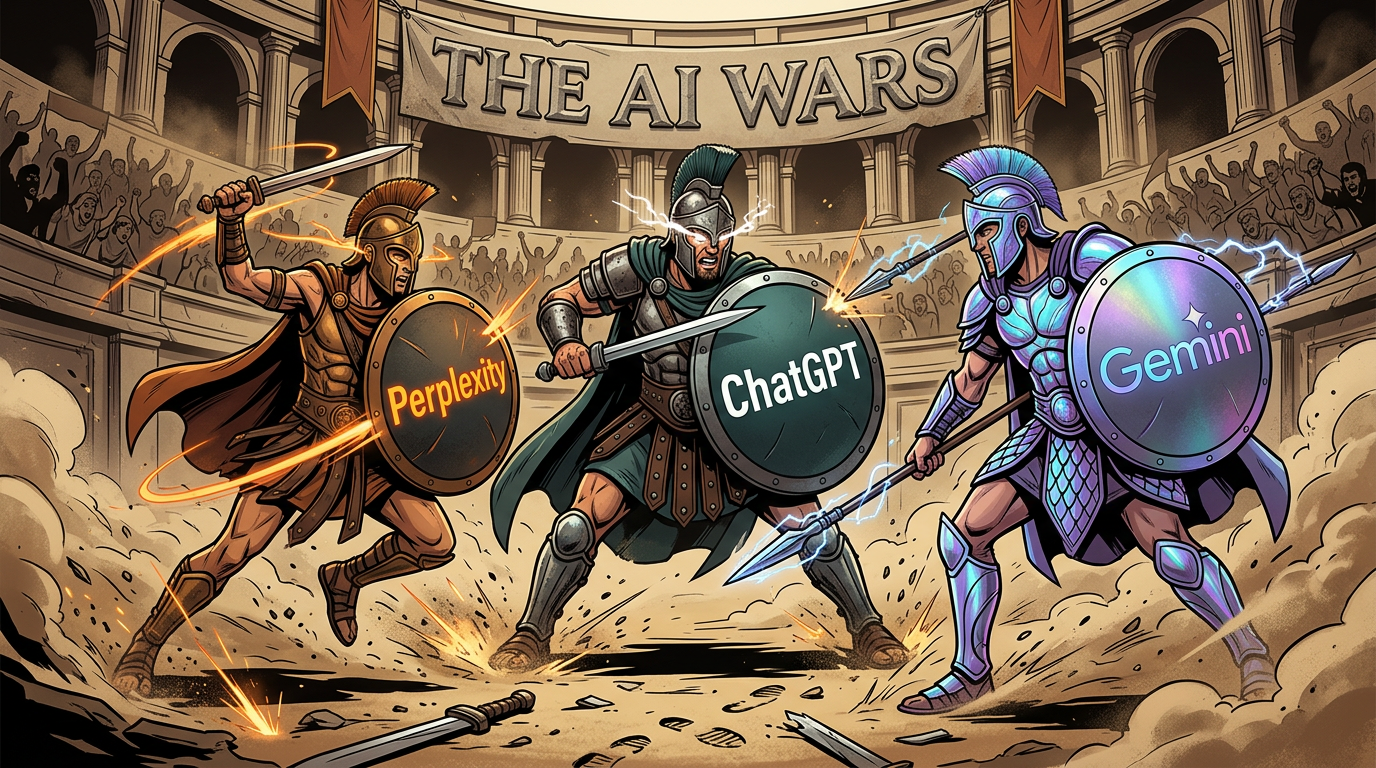
ChatGPT, Gemini and Perplexity are the three AI engines your customers increasingly ask before they ask you. ChatGPT is a conversational assistant from OpenAI, Gemini is Google's assistant built into its search and products, and Perplexity is an answer engine that researches the live web and cites its sources. For a business, the important thing they share is this: each one now answers buying questions directly, and your brand is either in that answer or it is not.
What is ChatGPT?
ChatGPT is a conversational AI assistant made by OpenAI that answers questions, writes, and helps with tasks through natural dialogue. It is the most widely recognized AI tool in the world and the entry point through which most people first experienced generative AI.
For business, ChatGPT matters because people use it as an advisor. They ask it to compare options, recommend providers, and explain categories. When connected to live web browsing, it can pull current information and reference sources, which means the way your brand is described online shapes what ChatGPT says about you.
What is Google Gemini?
Gemini is Google's family of AI models and its conversational assistant, woven into Google Search, Android, Workspace and more. Because it sits inside products people already use every day, its reach is enormous and growing.
For business, Gemini matters because it is increasingly the layer between a Google user and the open web. Gemini also powers Google AI Overviews, the AI summaries that now appear above traditional results for many searches. Being visible to Gemini means being visible at the exact moment Google answers a question on its own.
What is Perplexity?
Perplexity is an answer engine that searches the live web in real time and returns a written answer with visible citations to the sources it used. It is built around research and transparency, which is why it has won a loyal following.
For business, Perplexity matters because its citations are explicit. When Perplexity answers a question in your category, it names the sources it trusts. Being one of those named sources is concrete, visible visibility, and Perplexity has shown strong adoption in Indonesia, with millions of monthly branded searches.
How do ChatGPT, Gemini and Perplexity differ?
They overlap heavily, but each has a distinct character. The table below summarizes the practical differences for a business audience.
| Engine | Made by | Core strength | Cites sources | Why it matters for your brand |
|---|---|---|---|---|
| ChatGPT | OpenAI | Conversational help and reasoning | Sometimes, when browsing | Used as an advisor for comparisons and recommendations |
| Gemini | Built into Search and Google products | Within AI Overviews | The AI layer over everyday Google use | |
| Perplexity | Perplexity AI | Real-time research with visible citations | Yes, prominently | Names the sources it trusts in your category |
The takeaway is not which one to use. It is that all three answer your customers' questions directly, and all three decide which brands to mention based on the clarity and authority of what they find online.
Why does this matter for an Indonesian business?
Your customers in Indonesia are already adopting these tools, with hundreds of thousands of monthly searches for them and millions of interactions. When a potential customer asks one of these engines for the best provider, the most trusted product, or how to solve a problem you solve, the engine gives one answer. If your competitor is named and you are not, you have lost that customer before they ever reached your site.
This is why being understood by AI engines is now a business priority, not a technical curiosity. The discipline of earning that visibility is called generative engine optimization, explained in our guide on what GEO is, with the practical steps in our guide on getting cited in ChatGPT, Gemini and Perplexity.
What should a business do first?
Find out what these engines already say about you. Ask each one the questions your customers would ask, in your category and your city, and read the answers honestly. Note whether you appear, how you are described, and who is recommended instead.
That single exercise usually settles the debate about whether AI search deserves attention. From there, the path is to make your content citation-ready and build the authority that earns mentions. If you want help, that is what we do as an AI search and GEO agency in Indonesia.