
How Tech SEO Defines Your SEO Performance: The Kompas.ID Case Study

Earlier in the year, we were appointed as the SEO agency for Kompas.ID, one of Indonesia's most prominent subscription-based news platforms, with strong editorial output and a clear paying audience.
The problem was not the journalism. The problem was that Google could not see most of it.
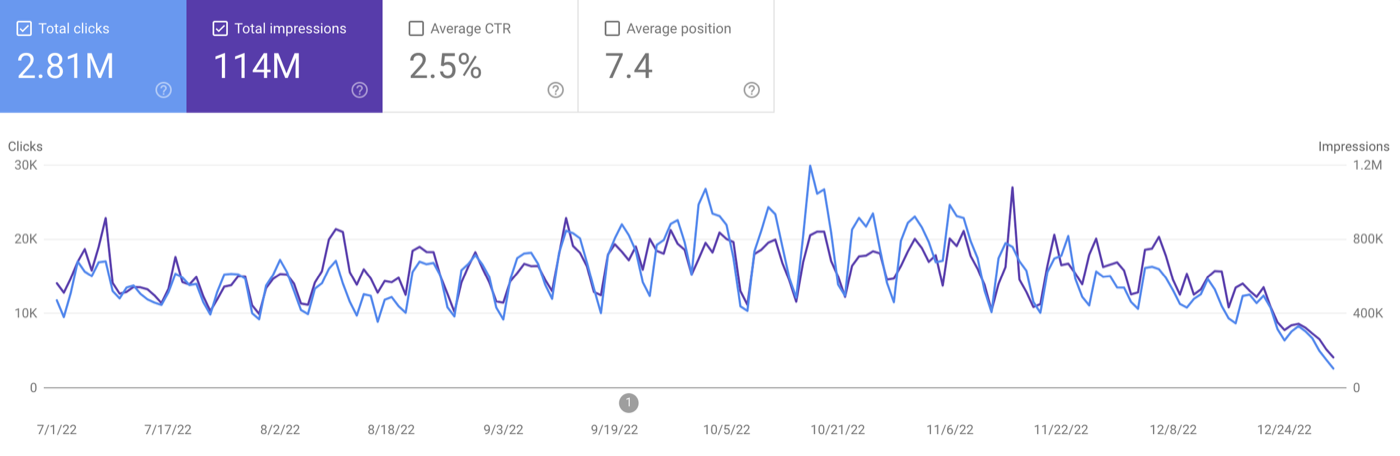
By December 2022, organic search performance had collapsed to fewer than 5,000 daily clicks. The most important queries the site used to rank for had quietly disappeared from the SERP. Editorial was working harder than ever; the traffic curve was still going the wrong way.
The state we inherited
The first month was diagnostic. We ran a full technical audit and benchmarked the site against its own historical performance. The picture was clear: the editorial product was fine, the technical foundation was not. Google was failing to crawl important sections, was missing the substance of paywalled articles, and was being blocked at the rendering stage on the highest value entry pages.
If we did not fix the foundation, no content strategy would land.
What the audit found
The audit grouped the issues into three categories.
Crawlability and indexability
Wrong page directives on important pages. Googlebot was being told not to crawl or index pages that were central to the editorial coverage. Some had been set as noindex during a past template migration and never reverted.
Obsolete sitemap. The XML sitemap referenced old paths and missed entire new sections. The signal to Google was stale.
Bloated entry points. Auto generated label and tag pages were absorbing crawl budget without providing value to readers, displacing the editorial pages we actually wanted indexed.
Page rendering
Paywall content invisible to Google. Most articles were paywalled, but the site did not implement the structured data that signals subscription content to search engines. Google was rendering the paywall message, not the article body. Rankings followed.
Render blocking JavaScript. Third party scripts were loading synchronously on the homepage and category pages, delaying rendering long enough that Google's crawler was sometimes giving up on the page before the content appeared.
Site architecture and link signals
Internal linking served the editorial CMS, not the reader. Links pointed to template fields by default rather than to the most relevant adjacent stories.
Canonical tags inconsistent across templates. Some sections were diluting their own ranking power through duplicate signals across desktop and mobile variants.
Structured data is no longer optional.
Paywall, FAQ, Article, and Author schema do not just help Google. They are how generative AI engines and answer assistants decide who to cite. A subscription site without proper schema is invisible twice: in Google's index, and in the AI answers that are increasingly mediating the journey.
Read about AI Search Optimization →What we fixed
The first three months of the engagement were spent restoring the foundation. We:
Reverted incorrect directives, restored indexability across the editorial archive, and tightened robots controls.
Rebuilt the sitemap from scratch, automated regeneration on publish, and pruned low value label pages from the index.
Implemented paywall structured data so Google could read and rank subscription content without compromising the business model.
Refactored the render path to remove third party JavaScript from the critical rendering window. Pages loaded faster and crawlers stopped giving up.
Standardised canonical tags across templates and rebuilt internal linking around editorial relevance, not CMS defaults.
The site needed to communicate better with the search engine. That is what we made it do.
Results
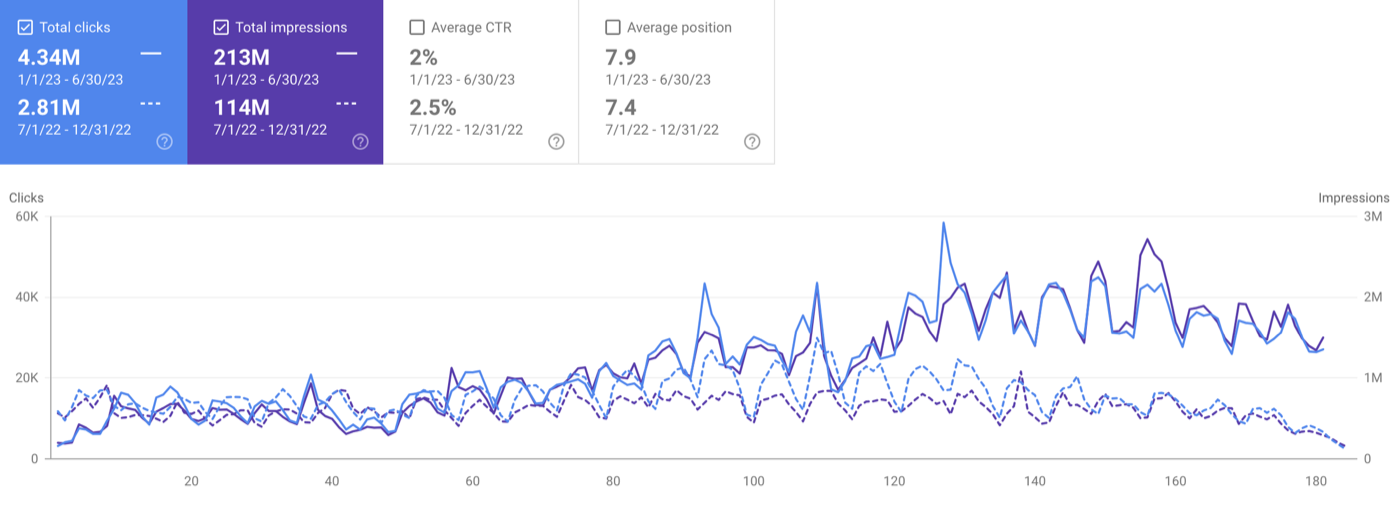
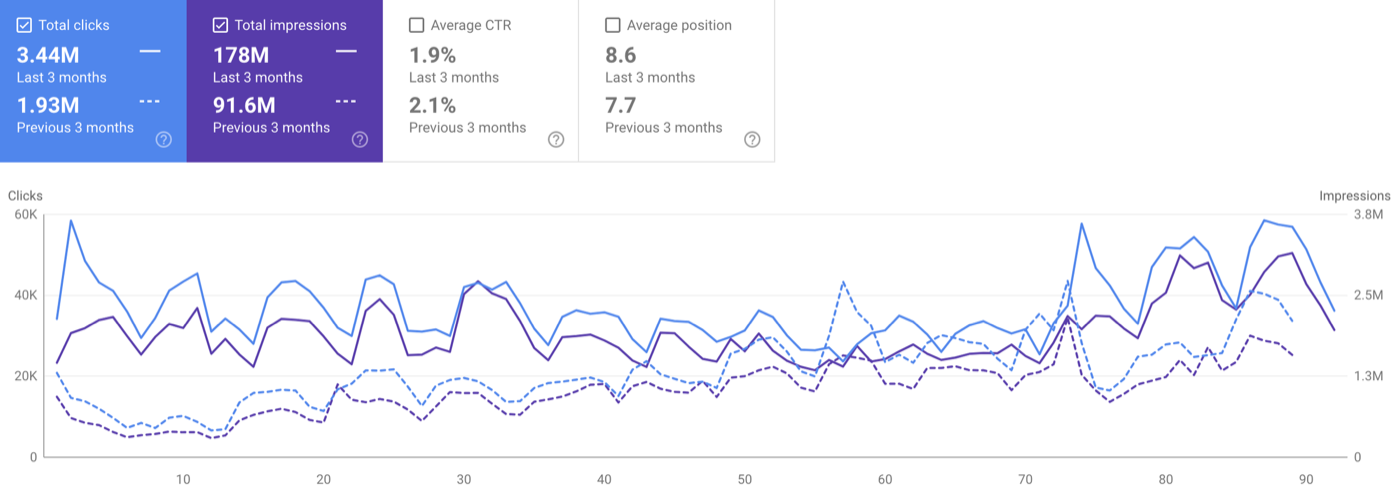
Six months after the engagement started, the recovery was clear in Search Console.
Why technical SEO defines performance
This case is the cleanest illustration of a rule we apply to every engagement: technical SEO sets the ceiling on everything else.
You can have the best editorial team in the country and the right topic strategy on paper, but if Google cannot crawl your pages, cannot render your content, or sees a paywall instead of an article, none of it ranks. The order matters: fix the foundation first, then the content strategy compounds.
This is also why we now treat structured data as a strategic discipline rather than a checklist item. The same schema that helps Google rank your subscription content is what AI engines read when deciding whether to cite you in their answers. Sites that get this right today defend their visibility against both algorithm changes and AI search compression.
What we are working on now
With the technical foundation restored, the next phase is content acceleration: Topic Ownership Strategy across the editorial calendar, optimisation of the top performing sections, and ongoing measurement of the queries that drive subscription conversions. Early indicators are already strong.
The answer is usually in the foundation.
Request a free SEO audit. We will run a full technical audit, surface the issues blocking your content from ranking, and recommend the order of fixes that delivers the fastest recovery.
Request a free SEO audit →See where your brand stands in AI answers today, benchmarked against your competitors, no pitch required.

How DOKU Became the Most Visible Payment Gateway in Indonesian Search
DOKU was the better-known brand and the worse-ranked one. Eight months of technical repair and four content pillars later, it holds more Top 3 rankings than any payment gateway in the market.
Read post →
How Taman Safari Indonesia Became the Most-Cited Wildlife Brand in AI Search
Taman Safari already led AI answers about Indonesian wildlife parks. The harder win was turning it into the page assistants cite, not the name they borrow.
Read post →
How Prenagen Came to Own AI Search in Indonesia
Generative engines now answer many of the high-intent questions that brands once captured through traditional rankings. When an AI Overview resolves a query inside the results page, the underlying website often loses the click, even when it ranks well. Across the Indonesian maternal-health category, keyword visibility contracted by roughly 9% as this repricing took hold.
Read post →